AI Incident Commander
Link to open source: https://github.com/priyansh87/knotic-hackathon-agent
AI Incident Commander
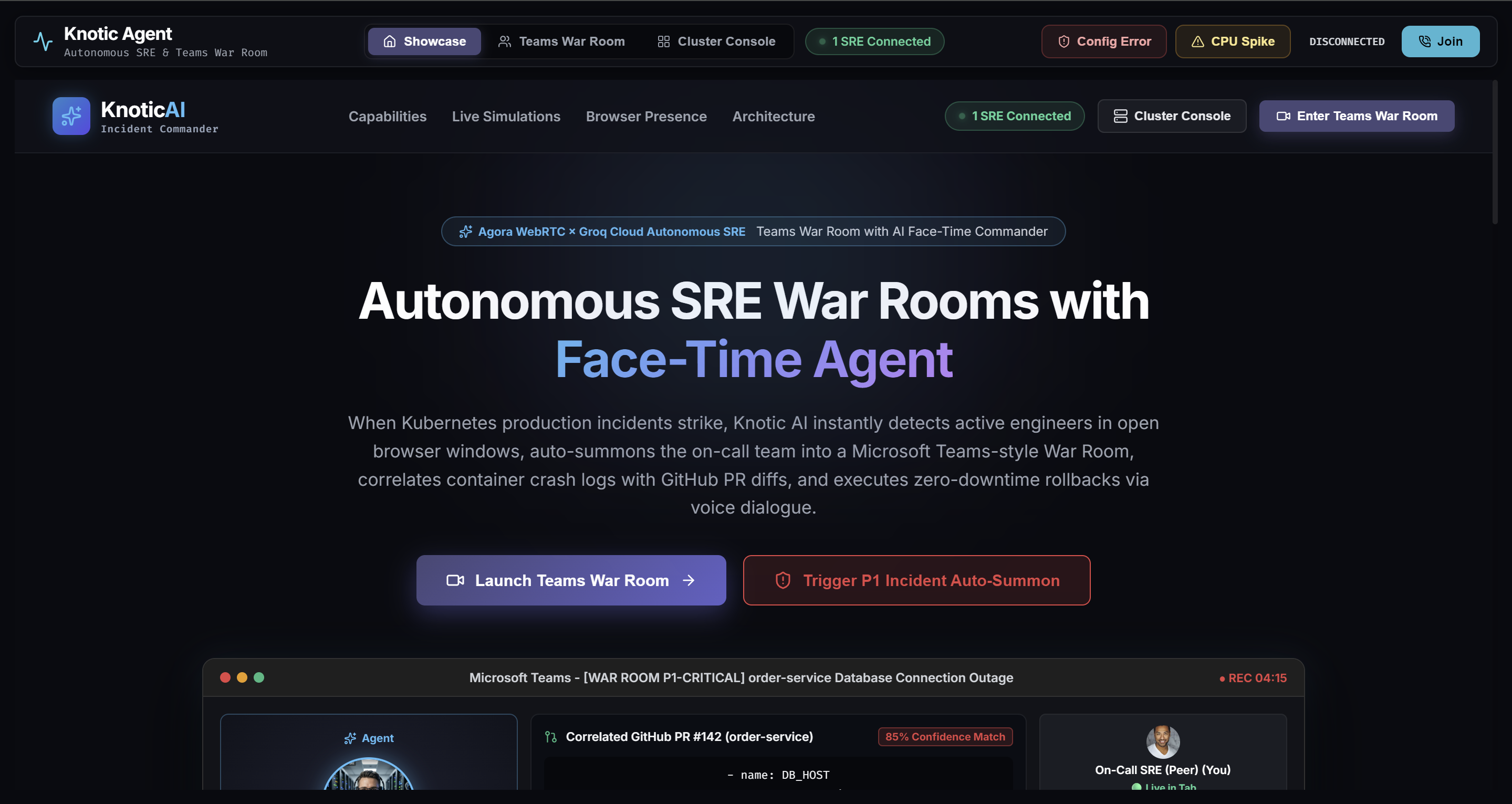
AI Incident Commander is a real-time, voice-native AI system designed to help engineering and operations teams manage production and technical incidents efficiently. During an outage, teams often need to coordinate across incident rooms, Slack, Kubernetes dashboards, logs, monitoring systems, deployments, and recent GitHub changes. Our solution brings these sources together and provides a centralized AI-powered incident command experience.
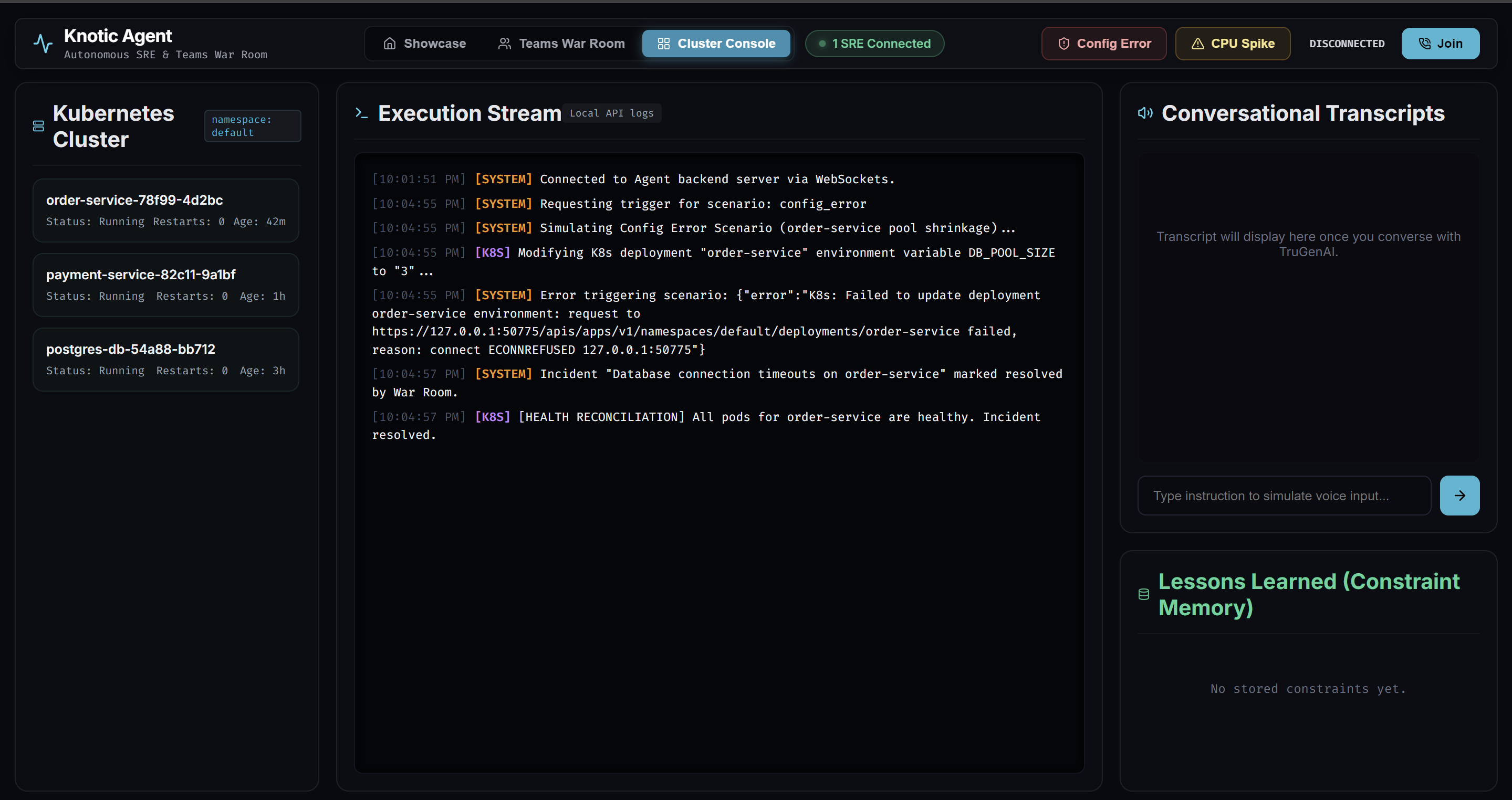
The AI joins a live incident room and listens to the ongoing discussion in real time. It understands the conversation, identifies participant roles, and continuously organizes information into confirmed facts, hypotheses, decisions, action items, task ownership, conflicts, and unresolved risks. It combines this conversational context with Kubernetes events, pod logs, monitoring alerts, deployments, and GitHub changes to maintain a continuously updated understanding of the incident.
When an incident occurs, the AI investigates the available evidence and correlates different signals rather than treating any single source as the truth. It can identify potential causes, provide a confidence score, and suggest appropriate remediation actions such as rollback, restart, scaling, or further investigation. Importantly, the system follows a human-in-the-loop approach: critical actions require explicit human approval before execution, and actions are performed through a controlled, whitelisted tool layer without raw shell access.
We have also added Slack integration to connect the AI Incident Commander directly with the team's existing communication workflow. Incident updates, decisions, escalations, and relevant information can be shared through Slack so that teams do not have to manually duplicate information across platforms.
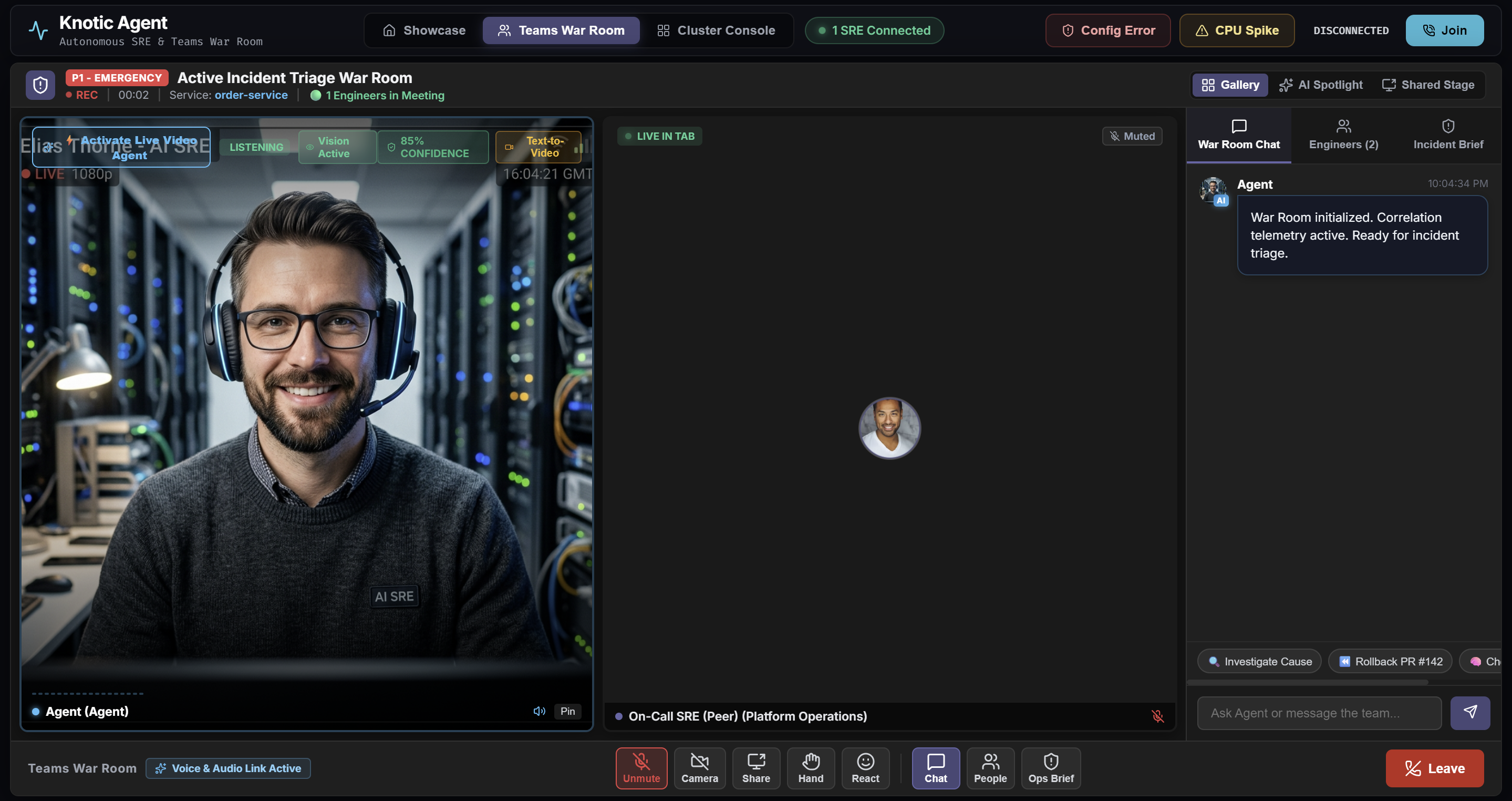
In addition, we have built a live video chat room for collaborative incident response. Engineers, support teams, and other stakeholders can join the same video room, communicate with each other in real time, and have the AI Incident Commander participate alongside them. This combines video communication, real-time voice interaction, AI analysis, and incident management into one collaborative environment.
Another important capability is persistent operational memory. When engineers provide operational policies or constraints through conversation, the system can retain these rules and apply them to future incidents. This helps convert valuable tribal knowledge into persistent, reusable operational knowledge rather than allowing it to get lost in chat messages or incident discussions.
The AI Incident Commander also incorporates a confidence-based trust model, where its level of autonomy depends on how confident it is in its analysis. With lower confidence, it focuses on investigation; with medium confidence, it can propose a solution and wait for approval; and with high confidence, it can operate within predefined guardrails. This ensures that automation remains controlled and that humans retain authority over critical production decisions.
Overall, AI Incident Commander transforms incident response from a fragmented and stressful process into a unified, intelligent, voice-first collaborative experience. By combining real-time voice and video communication, Slack integration, Kubernetes and monitoring data, GitHub context, AI-powered investigation, persistent operational memory, and human-approved remediation, it helps teams stay aligned, reduce cognitive load, respond faster, and make safer decisions during critical incidents.
This build was uploaded as a hackathon project


