How Blockchain Technology Is Transforming Crypto Exchange Development
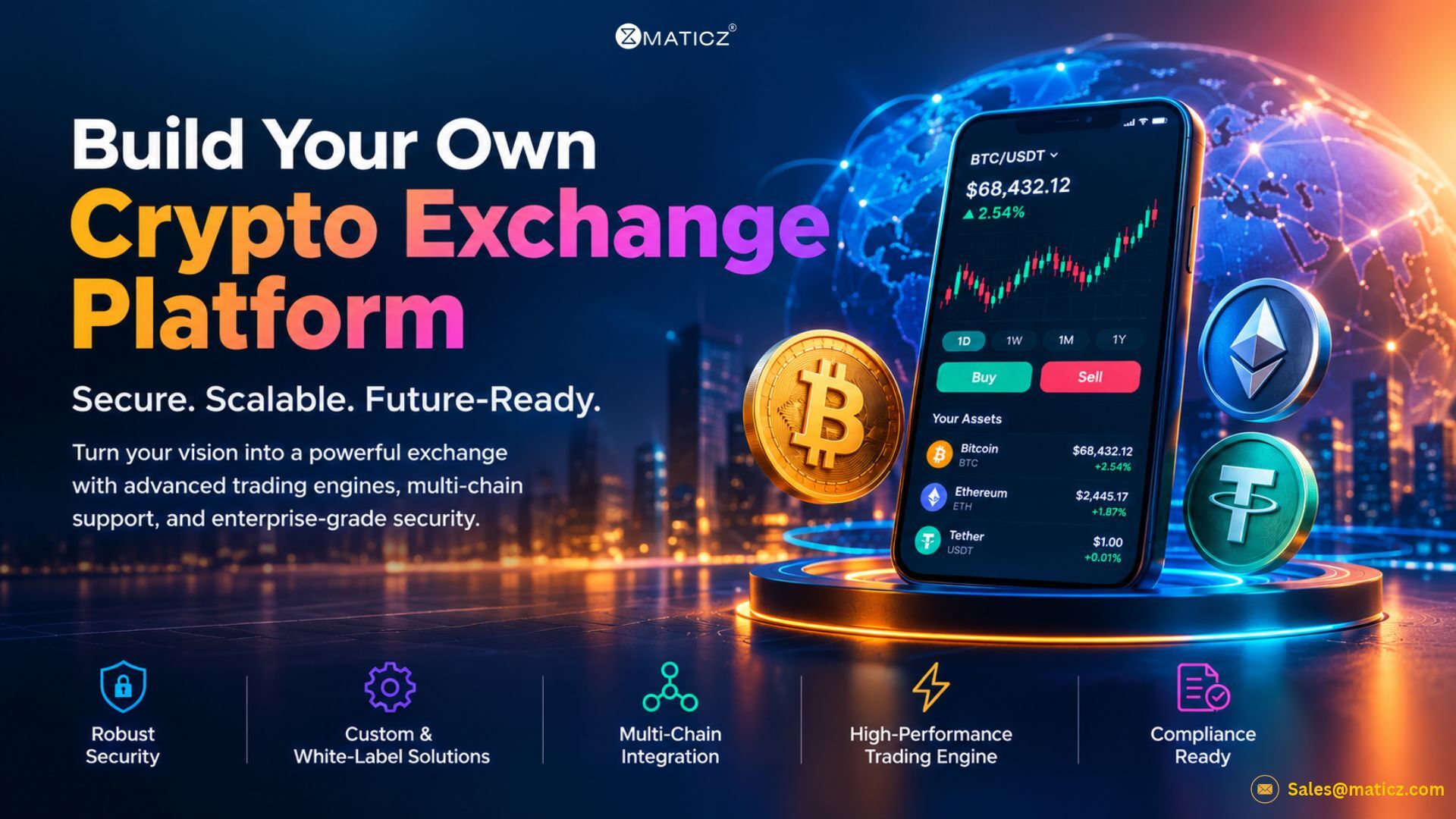
Link to open source: https://maticz.com/cryptocurrency-exchange-development
Introduction
Blockchain technology has become a fundamental part of the cryptocurrency industry, changing how digital assets are created, transferred, stored, and traded. As cryptocurrency adoption expands, businesses are exploring advanced exchange platforms that provide secure transactions, transparent operations, and efficient trading experiences. Blockchain technology supports these requirements by enabling decentralized data management, cryptographic verification, and peer-to-peer transactions.
Crypto exchange development involves building platforms where users can buy, sell, and exchange digital assets. By integrating blockchain technology, businesses can develop exchange platforms with improved security, automated processes, and support for multiple digital assets. Understanding these developments helps businesses make informed decisions when planning a cryptocurrency exchange.
Improving Transaction Security
Security is one of the most important considerations in cryptocurrency exchange development. Exchanges manage user accounts, digital assets, transaction records, and sensitive information, making them potential targets for cyberattacks.
Blockchain technology uses cryptographic techniques to verify transactions and maintain records across a distributed network. Once transactions are confirmed and added to the blockchain, modifying historical records becomes difficult without network consensus.
However, blockchain alone cannot eliminate every security risk. Exchange platforms also require secure wallet infrastructure, multi-factor authentication, access controls, encryption, monitoring systems, and regular security audits. Combining blockchain verification with these measures helps businesses create more resilient trading environments.
Enhancing Transaction Transparency
Traditional financial systems often rely on centralized databases and intermediaries to maintain transaction records. Blockchain introduces a different approach by maintaining a shared ledger that authorized network participants can verify.
Depending on the blockchain network, transaction information may be publicly accessible and independently verifiable. This transparency helps users confirm on-chain transfers and allows businesses to improve transaction tracking and reconciliation.
For cryptocurrency exchanges, blockchain records can support deposit verification, withdrawal tracking, and asset movement monitoring. Nevertheless, internal trades recorded in an exchange's centralized database may not appear directly on the blockchain. Businesses must distinguish between on-chain transfers and off-chain trading activity when designing their systems.
Supporting Smart Contract Automation
Smart contracts are programs deployed on blockchain networks that execute predefined instructions when specified conditions are met. They are particularly useful for decentralized exchanges and other blockchain-based financial applications.
In decentralized exchange development, smart contracts can facilitate token swaps, manage liquidity pools, and calculate transaction fees according to programmed rules. These capabilities reduce the need for a central operator to execute every transaction manually.
Smart contracts can also support token issuance, escrow arrangements, and other automated financial processes. However, coding errors or vulnerabilities may expose funds to risk. Professional development practices, independent audits, and ongoing monitoring are essential before deploying smart contracts in production environments.
Enabling Decentralized Exchange Models
Blockchain technology has enabled decentralized exchanges (DEXs), where users can trade digital assets directly through blockchain protocols rather than relying entirely on a centralized trading intermediary.
Unlike centralized exchanges (CEXs), which typically manage user accounts and maintain internal order books, decentralized platforms can allow users to connect personal wallets and execute trades through smart contracts.
Both models offer different advantages. Centralized exchanges can provide familiar interfaces, customer support, and high-performance trading engines. Decentralized exchanges can offer greater user control over assets and transparent on-chain execution.
Businesses can select an appropriate architecture based on their target audience, trading requirements, custody model, and operational responsibilities.
Expanding Multi-Chain Trading Capabilities
The blockchain ecosystem includes networks such as Ethereum, BNB Smart Chain, Solana, and Polygon, each offering different technical characteristics, transaction costs, and application ecosystems.
Multi-chain crypto exchange development allows platforms to support assets and services across multiple blockchain networks. This can broaden asset availability and give users access to different blockchain-based markets.
Developers must account for network-specific integrations, wallet compatibility, transaction confirmation times, token standards, and withdrawal validation. Cross-chain transfers may require bridges or other interoperability protocols, which introduce additional security considerations.
Careful integration planning helps exchanges provide reliable multi-network functionality without compromising transaction accuracy or user experience.
Improving Operational Efficiency
Blockchain integrations can automate parts of exchange operations, including deposit monitoring, transaction confirmation, withdrawal processing, and asset reconciliation.
For example, a platform can monitor blockchain events to identify incoming deposits and credit user balances after the required confirmation threshold is reached. Automated monitoring reduces manual intervention and helps operational teams process transactions consistently.
However, efficient exchange performance also depends on components outside the blockchain, including matching engines, databases, liquidity integrations, and infrastructure scalability. A well-designed platform balances on-chain verification with fast internal processing to deliver a responsive trading experience.
Strengthening Compliance and Asset Management
Cryptocurrency exchanges must consider applicable regulatory requirements when operating in their target markets. Depending on jurisdiction and business model, these requirements may include customer verification, anti-money-laundering controls, transaction monitoring, reporting, and recordkeeping.
Blockchain analytics tools can help businesses examine transaction histories, identify suspicious activity, and assess wallet-related risks. Exchange operators can integrate these tools with internal monitoring and compliance workflows.
Blockchain-based asset tokenization also creates opportunities to support additional digital assets, subject to relevant legal and technical requirements. Exchanges must evaluate asset eligibility, custody arrangements, investor protections, and applicable regulations before listing new products.
Choosing the Right Crypto Exchange Development Approach
Successful cryptocurrency exchange development requires more than connecting a platform to a blockchain network. Businesses should evaluate the exchange model, supported assets, transaction volumes, custody requirements, security architecture, liquidity sources, and future expansion plans.
A centralized platform may require a high-performance matching engine and secure custodial wallets. A decentralized platform may depend more heavily on smart contracts, wallet connectivity, and on-chain liquidity mechanisms. Hybrid architectures can combine selected features of both approaches.
Working with an experienced blockchain development company provider can help businesses define requirements, select suitable technologies, and plan integrations according to their operational goals.
Conclusion
Blockchain technology is transforming crypto exchange development through cryptographic verification, transparent transaction records, smart contract automation, decentralized trading, and multi-chain connectivity. These capabilities create new opportunities for businesses seeking to build modern digital asset trading platforms.
However, blockchain integration must be supported by strong security controls, reliable infrastructure, effective liquidity management, and regulatory awareness. By selecting the right architecture and focusing on long-term scalability, businesses can develop cryptocurrency exchanges designed to meet evolving market and user requirements.
