Ecovia
Link to open source: https://github.com/Jahanvi11-1/Ecovia
Ecovia PLM
Ecovia is a Product Lifecycle Management (PLM) system designed for companies that manufacture, engineer, and manage physical products. It helps engineering, operations, and management teams safely manage product information, Bills of Materials (BOMs), and engineering changes throughout a product’s lifecycle.
Who is Ecovia made for?
Ecovia is primarily designed for manufacturing and engineering organizations where products are constantly evolving and changes need to be carefully controlled.
It can be used by:
-
Engineering teams who propose changes to products or Bills of Materials
-
Managers and designated approvers who review and approve engineering changes
-
Operations teams that need reliable, read-only access to current product information
-
Administrators who manage users, permissions, workflows, and system settings
What problem does it solve?
In many organizations, changing a product specification or BOM is not as simple as editing a document. A small change to a component, quantity, specification, or product version can affect manufacturing, procurement, quality, and downstream operations.
If changes are made directly, it becomes difficult to answer important questions:
-
Who changed this?
-
What exactly was changed?
-
Who approved it?
-
What was the previous version?
-
When did the change happen?
-
Was the change properly validated before being implemented?
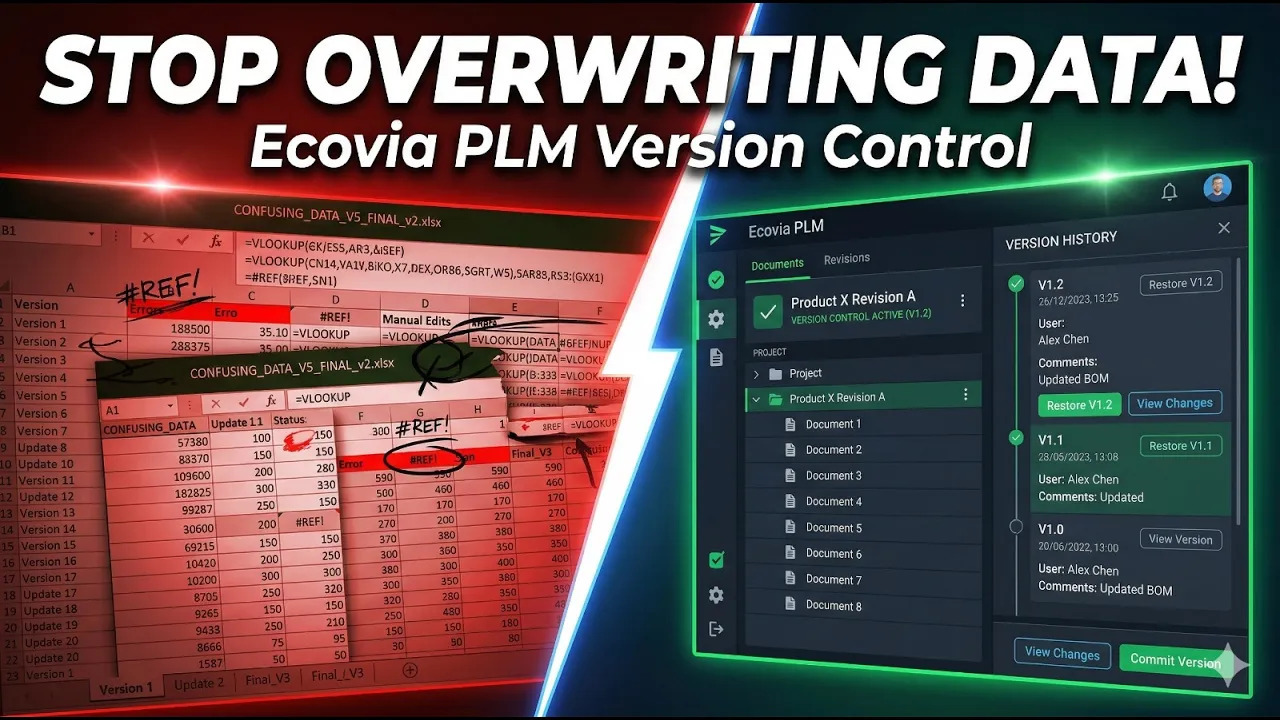
Ecovia addresses this by making product and BOM data immutable by default. Instead of directly modifying active data, users propose changes through an Engineering Change Order (ECO).
How does it work?
An engineer creates an ECO describing the proposed change. The system generates a clear comparison between the existing and proposed data. The ECO then moves through a configurable approval workflow.
Depending on the organization's process, multiple stages and approvers can be involved. Only after the required approvals and validation are completed can the change be applied.
When a change is applied, Ecovia can create a new product version while preserving the previous version. Every important action is also recorded in an immutable audit trail.
This creates a controlled chain:
Current Product → Proposed Change → Review → Approval → Validation → Application → New Version → Audit History
Why is it useful?
The main value of Ecovia is controlled change management.
Instead of treating product data like something that can simply be overwritten, Ecovia treats every important change as an accountable engineering decision.
This helps organizations:
-
Reduce accidental or unauthorized changes
-
Maintain product and BOM history
-
Make approvals transparent
-
Understand exactly what changed between versions
-
Improve accountability across engineering and operations
-
Maintain a reliable audit trail
-
Establish consistent change-management workflows
-
Reduce confusion when multiple teams work with the same product data
Goal and purpose
The goal of Ecovia is to make product changes traceable, controlled, and reliable.
Its purpose is not simply to store product information. It is to create a structured system around the entire process of changing that information.
Ecovia was built around a simple principle:
Important product data should not silently change. Every meaningful change should have a reason, an approval process, and a history.
By combining version control, engineering change orders, configurable approval workflows, role-based access control, difference visualization, and audit trails, Ecovia aims to provide a trustworthy foundation for managing products throughout their lifecycle.
