HydroVexel - An AI-Powered Oil Spill Detection System
Link to open source: https://github.com/simplysandeepp/Oil-Spill-Detection
Link to Live Project: https://hydrovexel.streamlit.app/
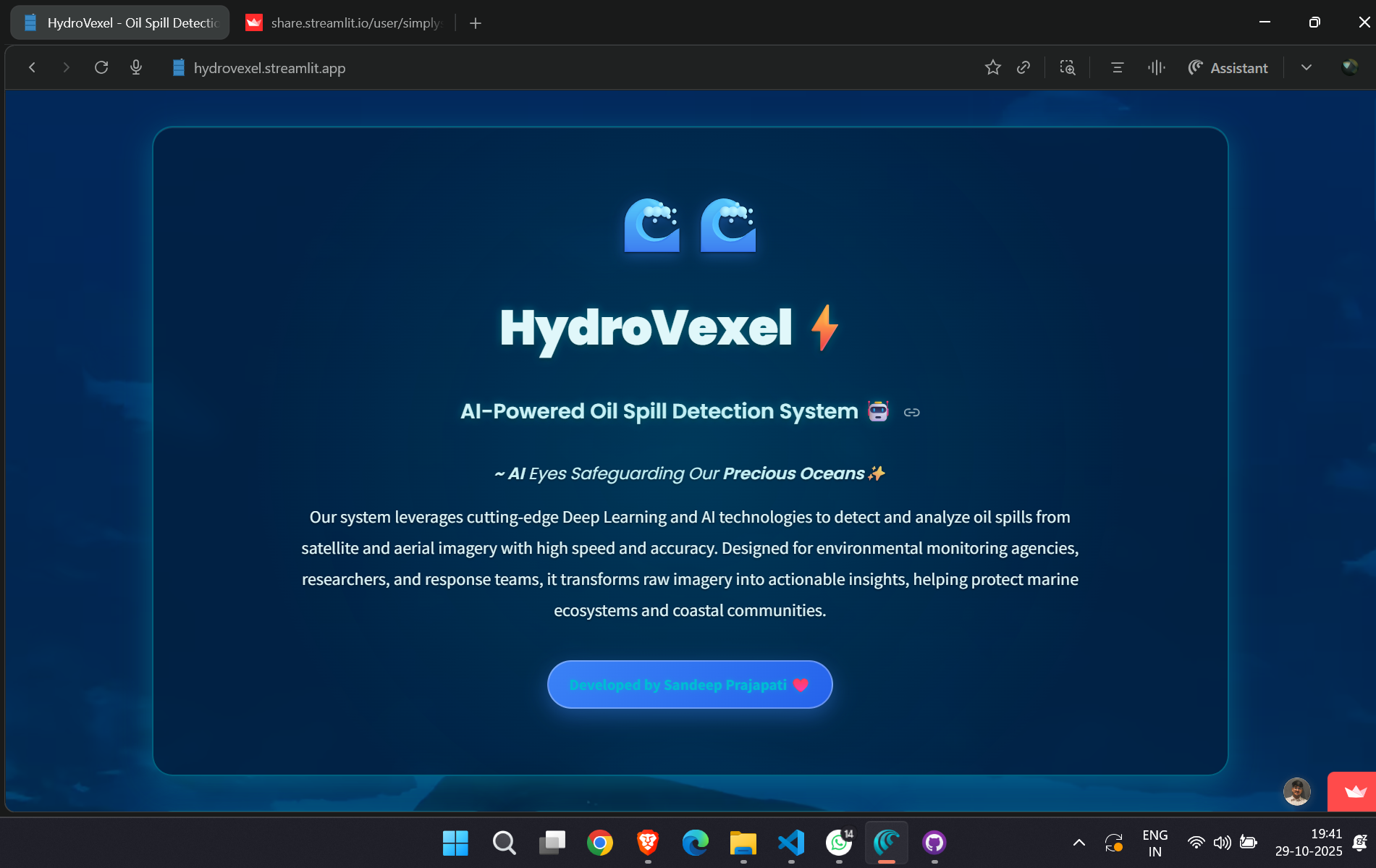
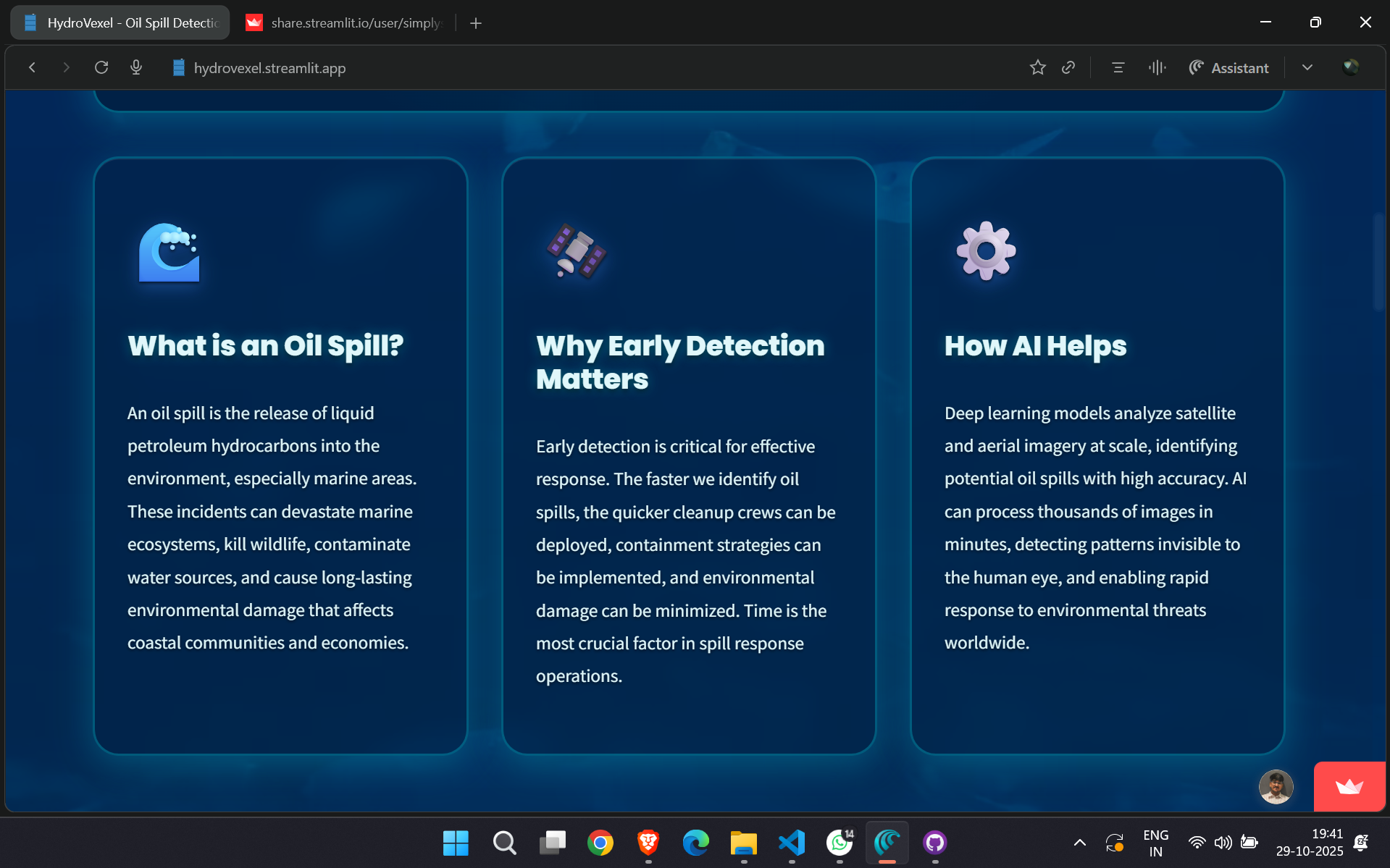
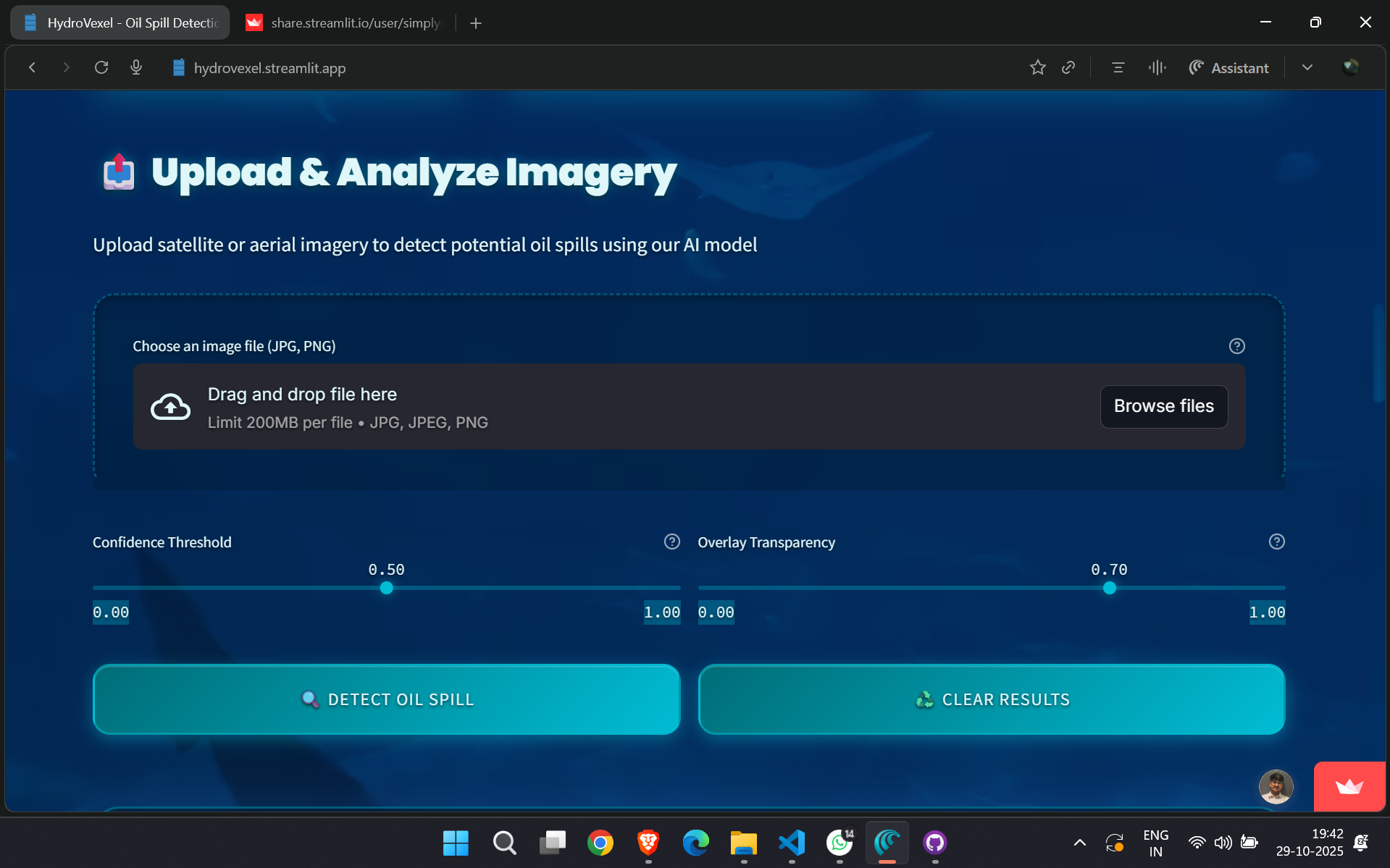
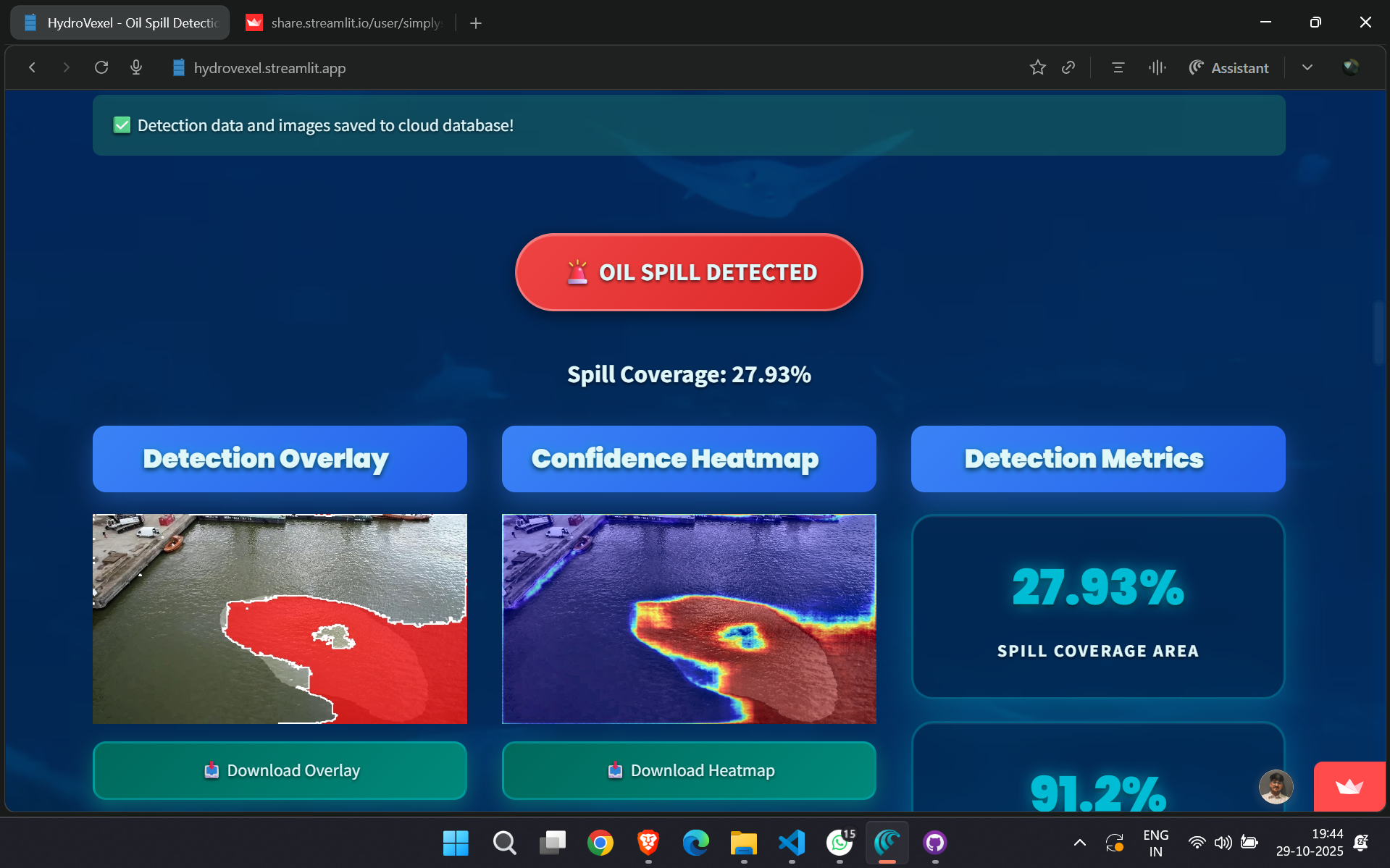
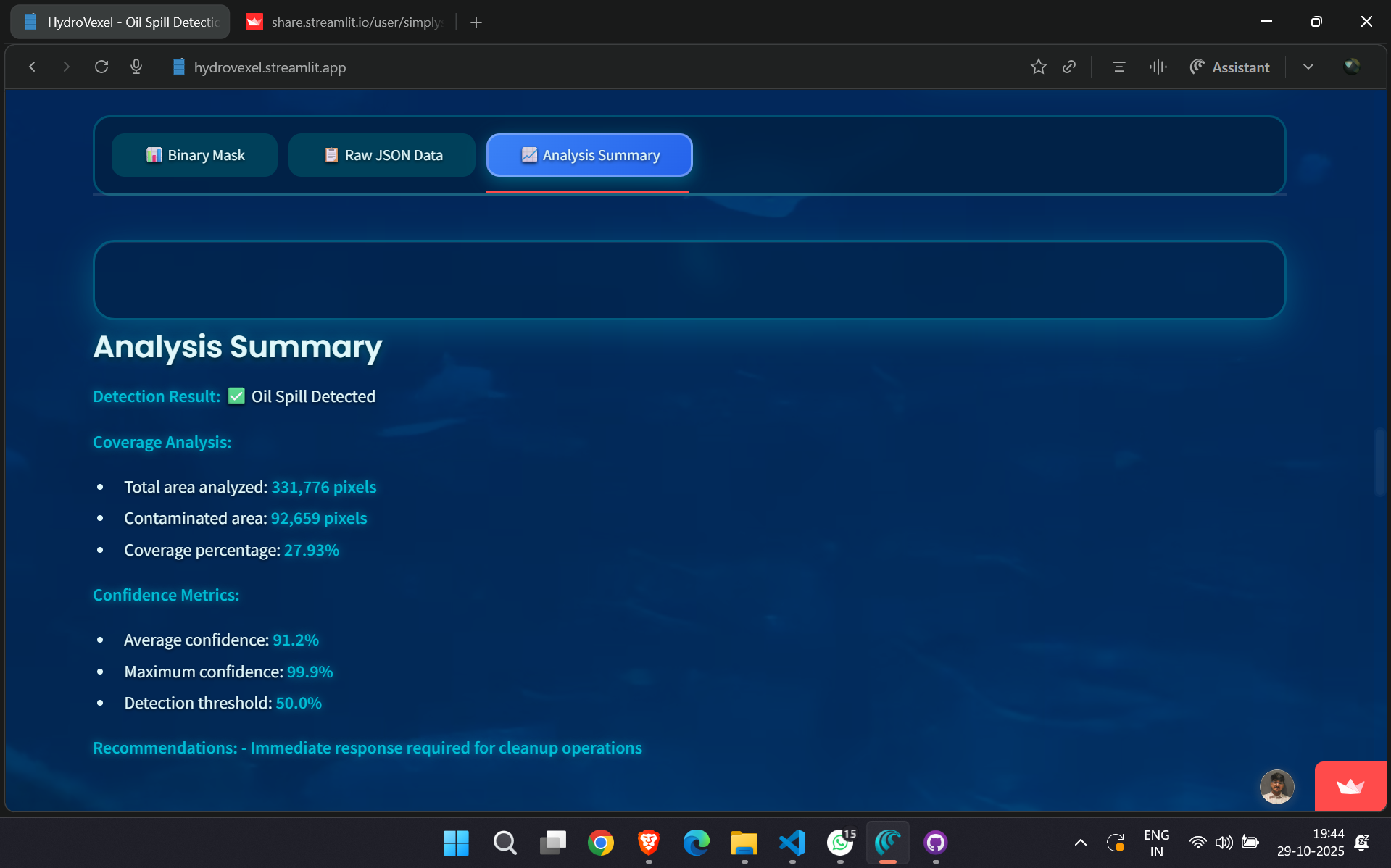
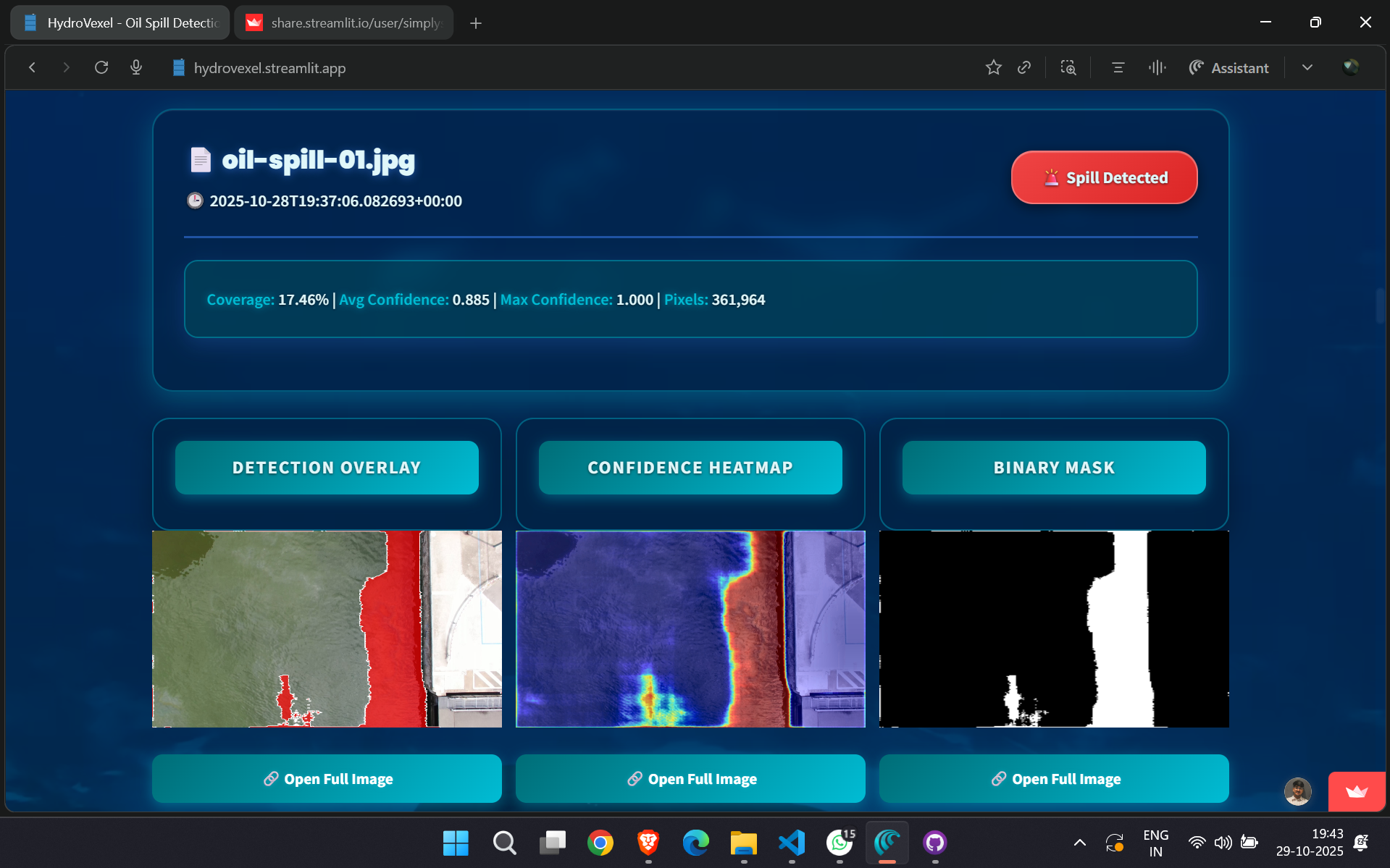
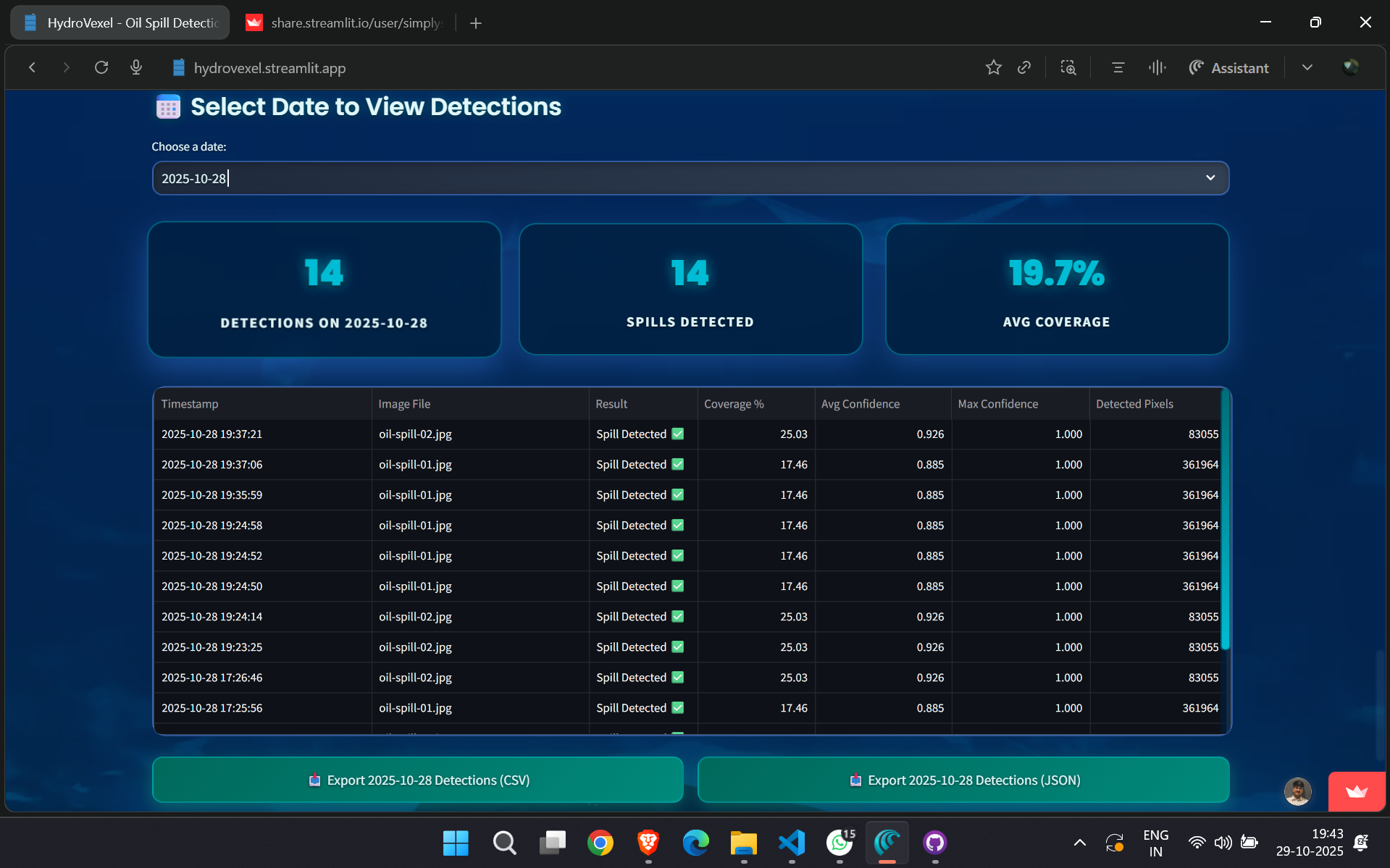
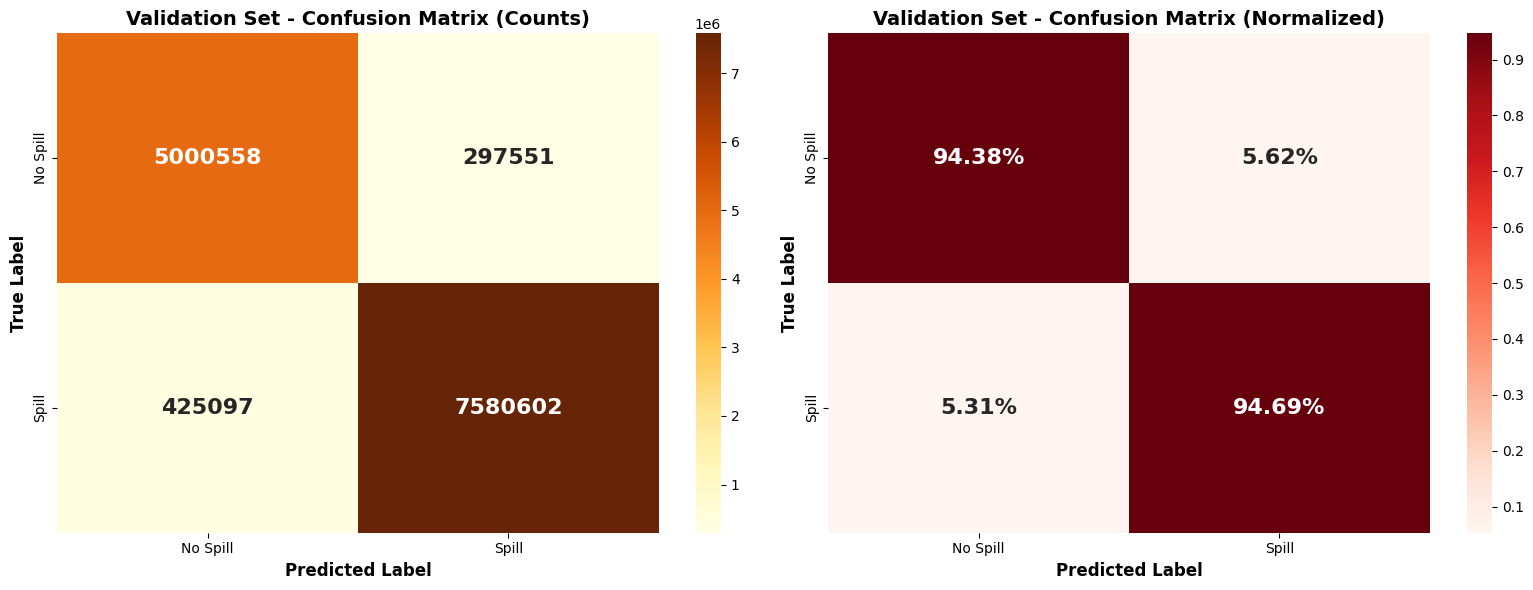
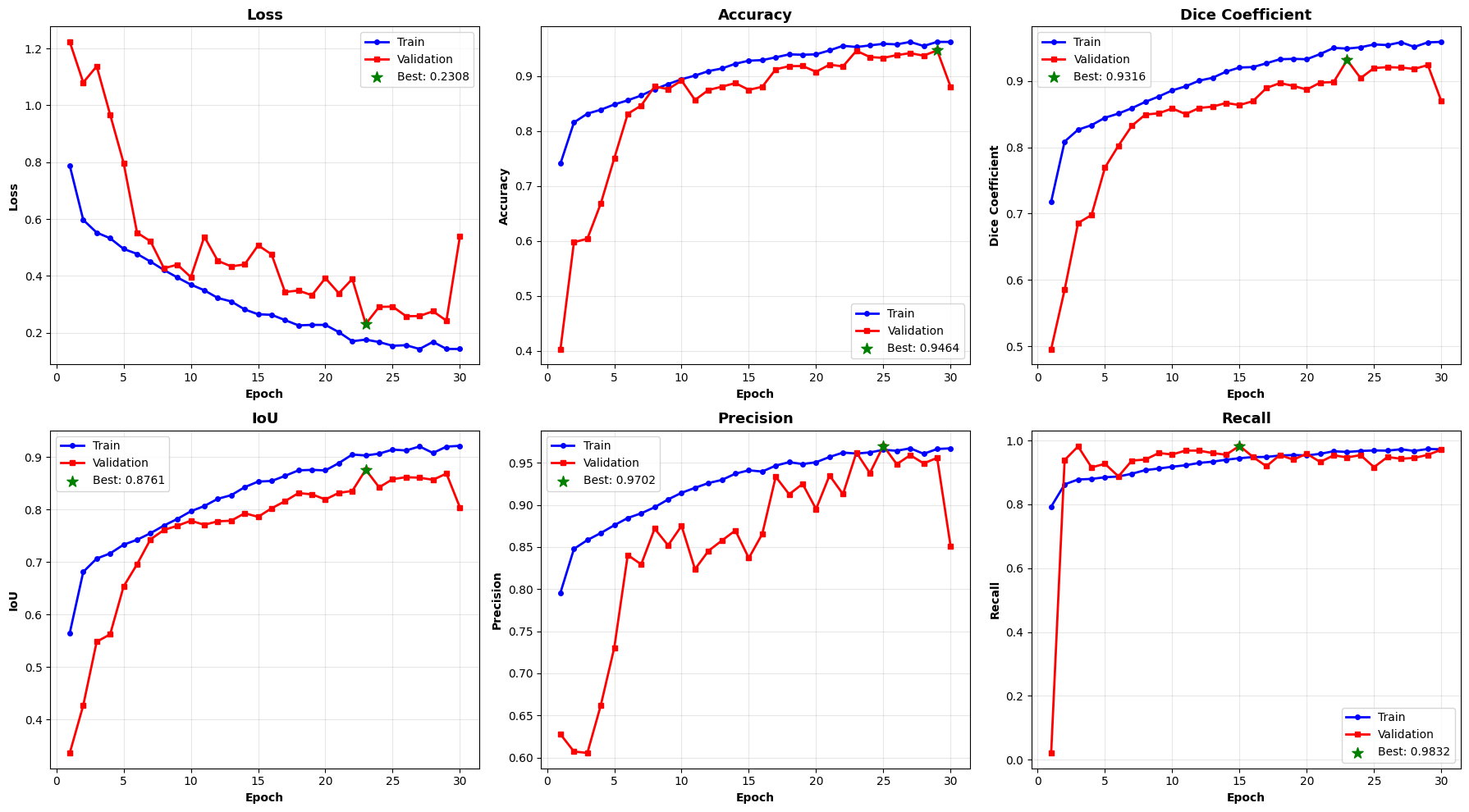
HydroVexel is an AI-powered oil spill detection system designed to protect our oceans by automating the identification of oil spills from satellite and aerial imagery. Traditional detection methods rely on manual image inspection, which is slow and often delayed, leading to severe ecological and economic damage. HydroVexel solves this by using a deep learning model based on the U-Net with Attention mechanism, achieving an impressive 94.57% accuracy in distinguishing oil spills from ocean surfaces. Users can simply upload an image on the live web app to instantly visualize spill regions, confidence heatmaps, and detection masks. Built with TensorFlow, Keras, Streamlit, and Supabase, it’s lightweight, cloud-connected, and easy to use even for non-technical users.
This system is highly beneficial for environmental agencies, research institutions, coast guards, and oil companies to monitor marine areas in real-time, detect spills early, and respond before widespread damage occurs. Researchers and students can also use HydroVexel as an open-source learning project to explore how AI can solve sustainability challenges. By transforming complex satellite data into actionable insights within seconds, HydroVexel empowers rapid response, enhances marine safety, and demonstrates the power of AI for environmental conservation.
1. Environmental & Government Agencies: Early detection → faster containment and cleanup → reduced ecological damage and cost. Can be integrated into monitoring pipelines to create alerts when a new spill is detected.
2. Coast Guards & Response Teams: Provides geolocated visual evidence and confidence scores so teams can prioritize resources and dispatch cleanup vessels or aerial teams.
3. Oil Industry & Operators: Continuous surveillance for leaks around rigs/pipelines; reduce liability and environmental penalties by catching incidents early.
4. Researchers & Universities: Provides labeled masks and predictions for research into remote-sensing, oil-spill behavior, and environmental impact analysis. (Zenodo dataset link in README helps reproducibility).
5. NGOs & Citizen Scientists: Low-barrier interface (web app) allows non-technical actors to monitor coastal areas, report incidents, and raise awareness.
6. Developers & Students: Open repo + clear demo (Streamlit) is a learning resource for segmentation, model deployment, and full-stack ML projects. Great for CV/portfolio.
🔗 GitHub: https://github.com/simplysandeepp/Oil-Spill-Detection
🎥 Demo Video: https://drive.google.com/file/d/1sh7i6XlWyvCFv0xv8uxbT7VCvQFAWfbk/view?usp=drive_link
This build was uploaded as a hackathon project

