Make0 Brain: Shared AI memory for every agent
Link to open source: https://github.com/make0-official/brain-oss
Make0 Brain: Shared AI Memory for Every Agent
I built Make0 Brain after running into a familiar problem while using multiple AI agents: each one kept its own memory, so I had to repeat context and important decisions did not reliably carry over. If you work across several agents, you may know the feeling. I wanted one user-owned place where every connected assistant could find the same useful context - and where I could see and control what was remembered.
Why Make0 Brain
- One memory, every agent: Save a fact in one assistant and retrieve it from another.
- You stay in control: Data lives in a local SQLite database and can be exported as Markdown.
- Changes are traceable: Every memory version records its writer and time.
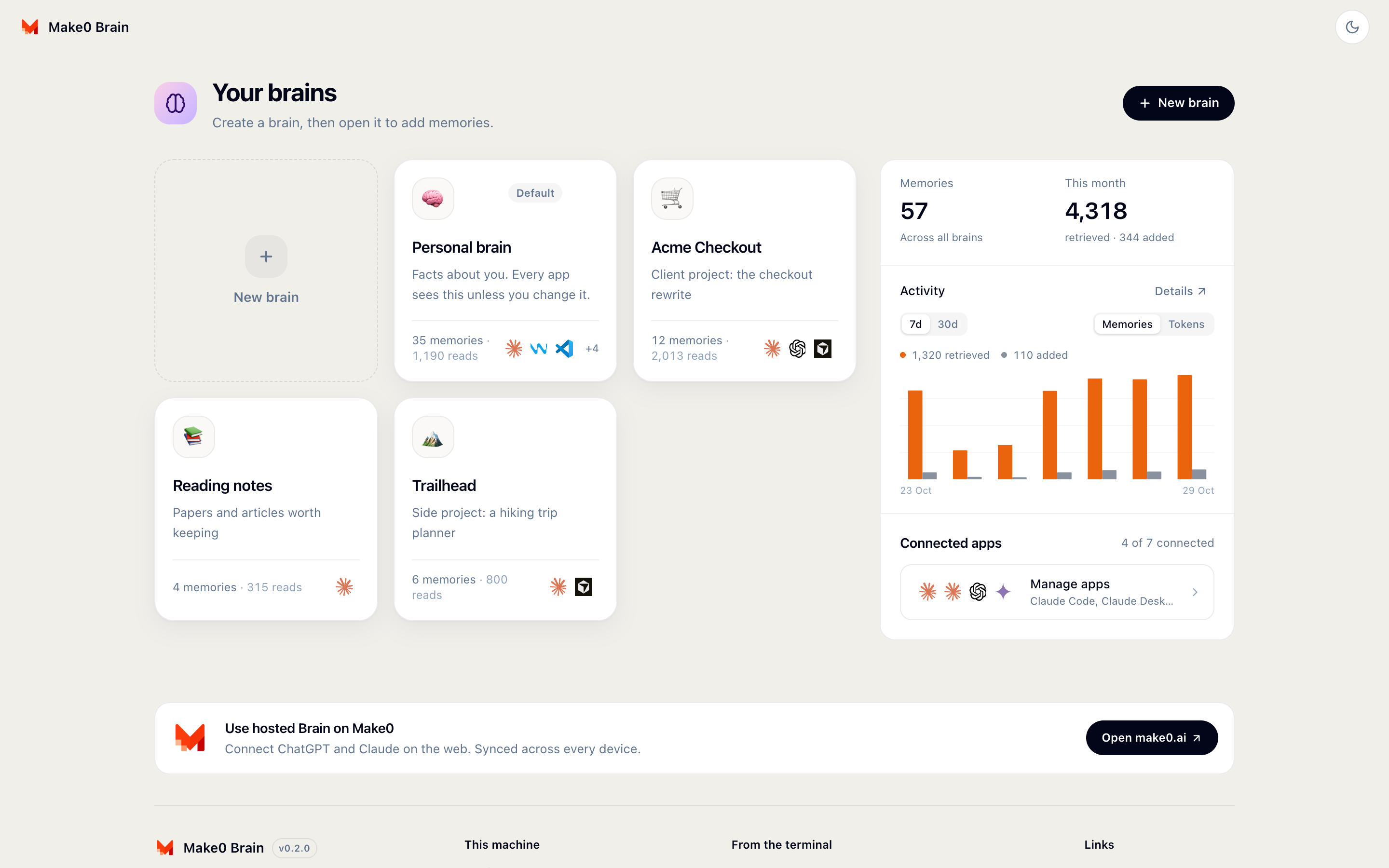
- Separate contexts: Create additional brains for projects or clients and grant access per agent.
How it works
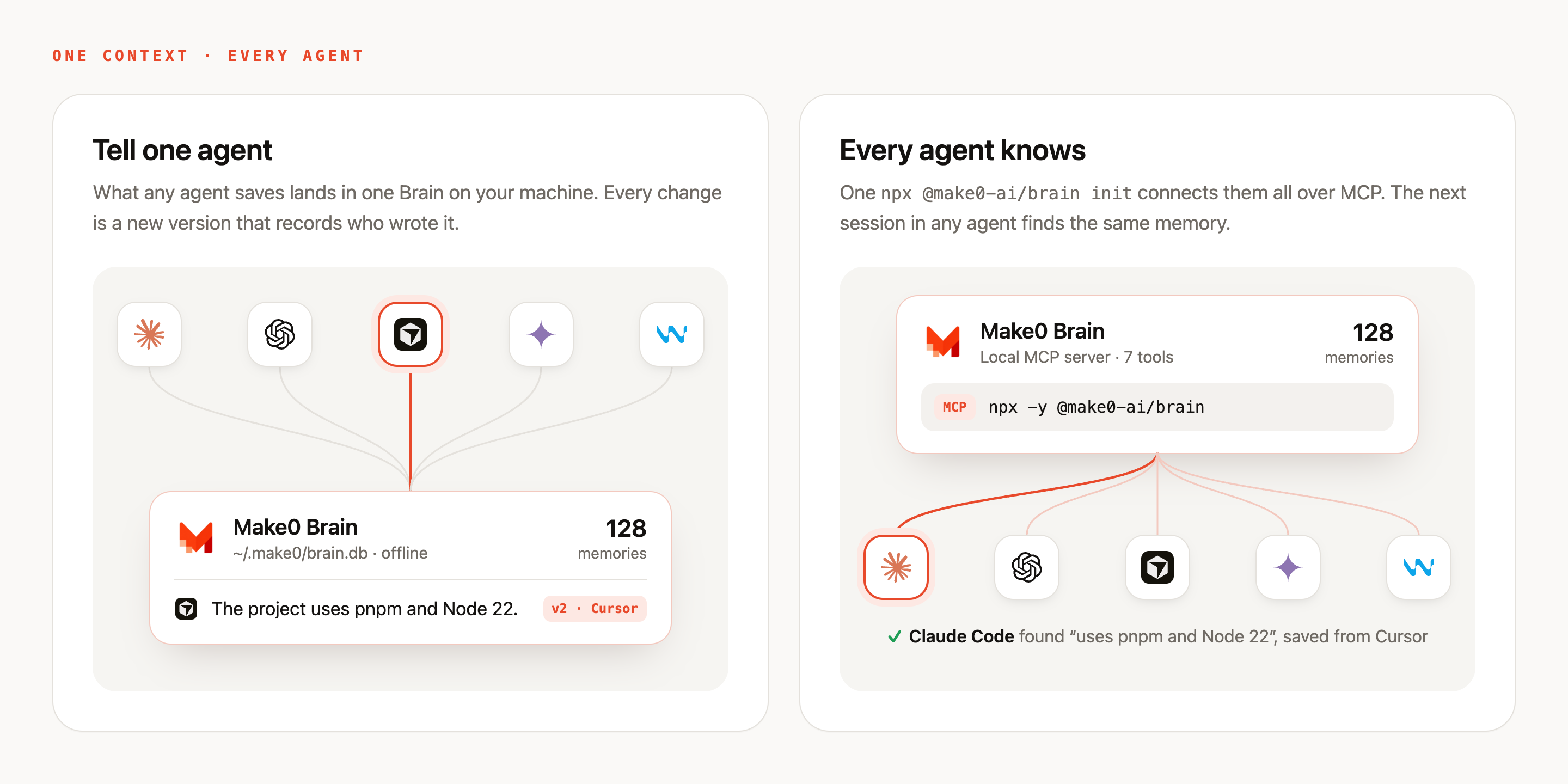
Make0 Brain runs as a local MCP server. It uses local embedding and reranking models, downloaded once, then works offline without an API key.
Run npx @make0-ai/brain init to set up supported clients, including Claude Code, Claude Desktop, Cursor, Codex CLI, Windsurf, VS Code, Gemini CLI, Hermes Agent, and OpenClaw. The initializer backs up configuration files before changing them, adds the MCP server, downloads the models, and provides the instruction that tells agents to search Brain before answering and save lasting facts. Restart your apps after setup.
All connected agents receive the same seven tools:
list_brains— see which brains the app can access.search_brain— find relevant context.get_memoryandget_memory_versions— read a memory and its history.add_memory,update_memory, anddelete_memory— save and manage memories.
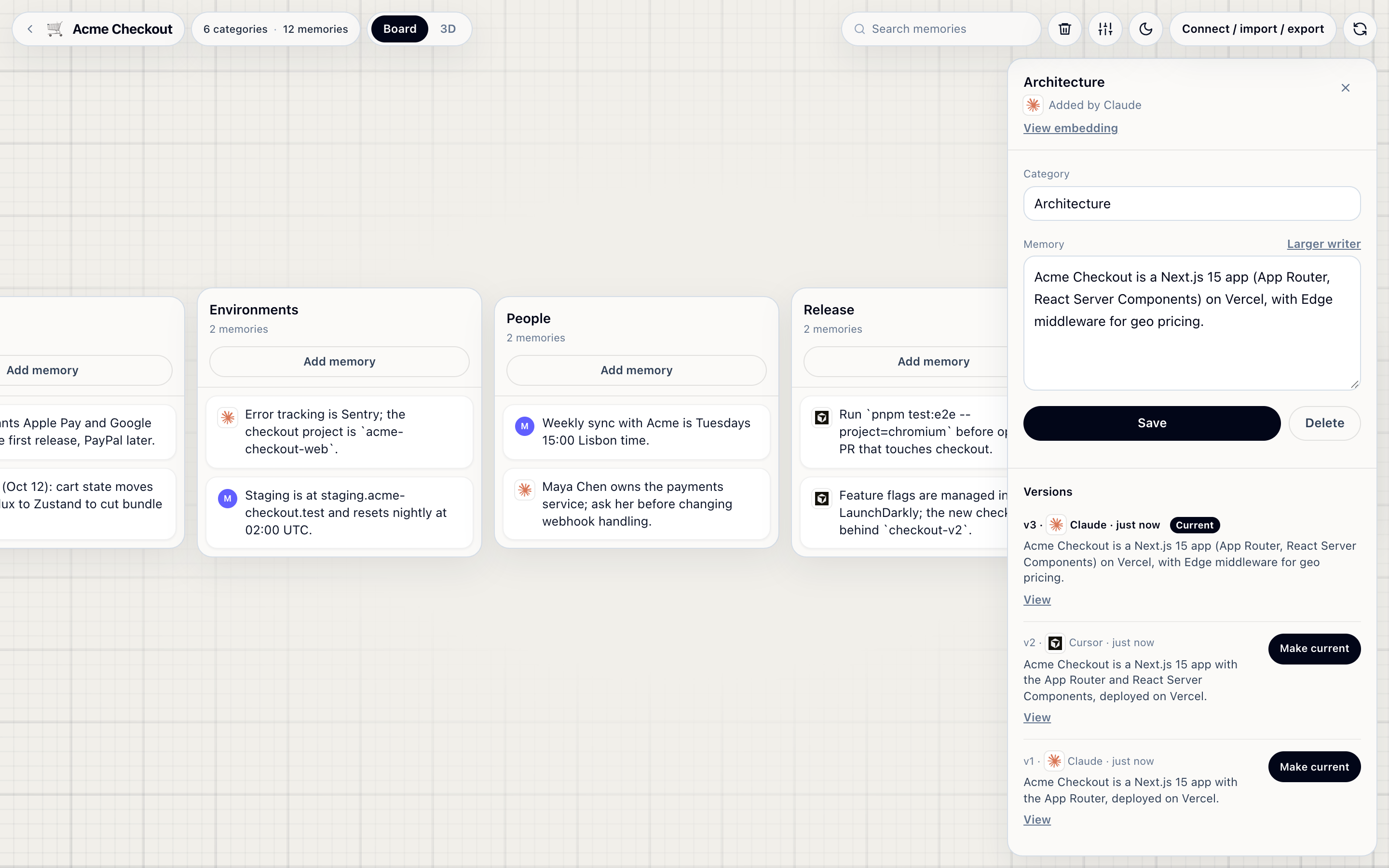
Versioned, recoverable memory
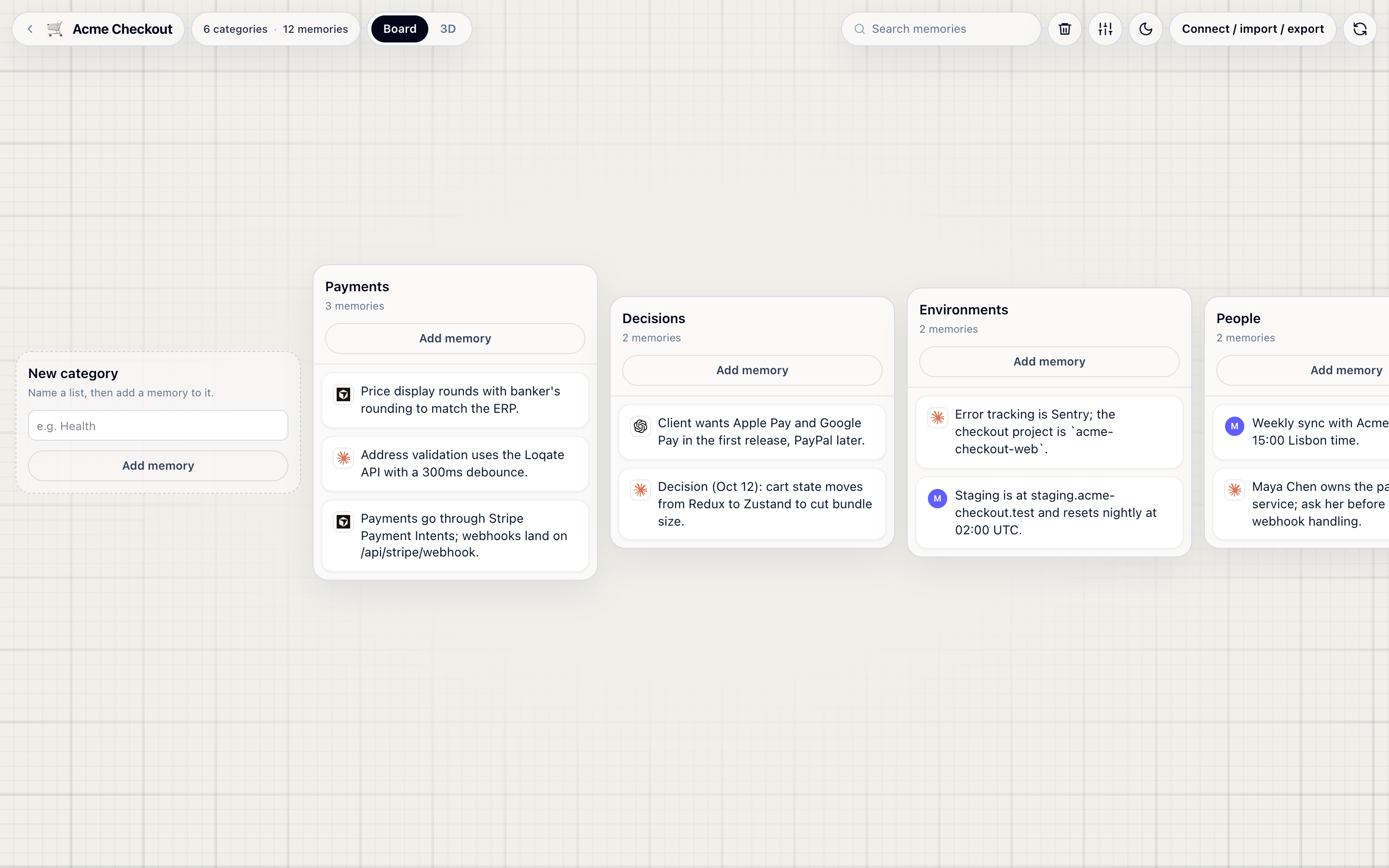
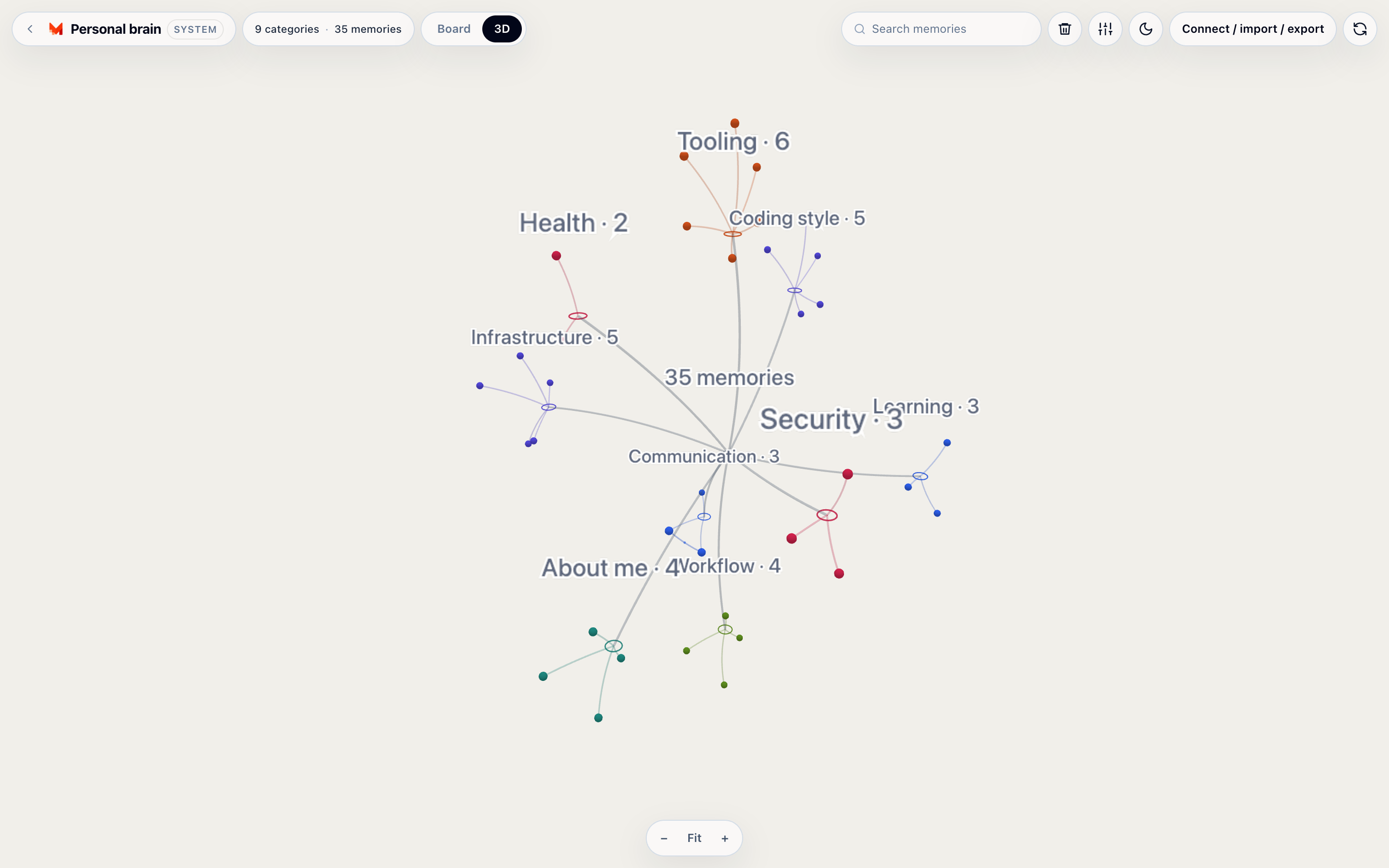
Each memory records which assistant wrote it. Updates create versions instead of overwriting history. Contradictions can archive older facts; similar memories are merged only when an API key is configured. Without a key, possible duplicates are kept rather than guessed at. Related memories are linked to help searches find connected context. Agent deletions archive memories for recovery; only the user can permanently purge them.
See Make0 Brain
How agents share one local Brain
Multiple brains and access
Memories organized by category
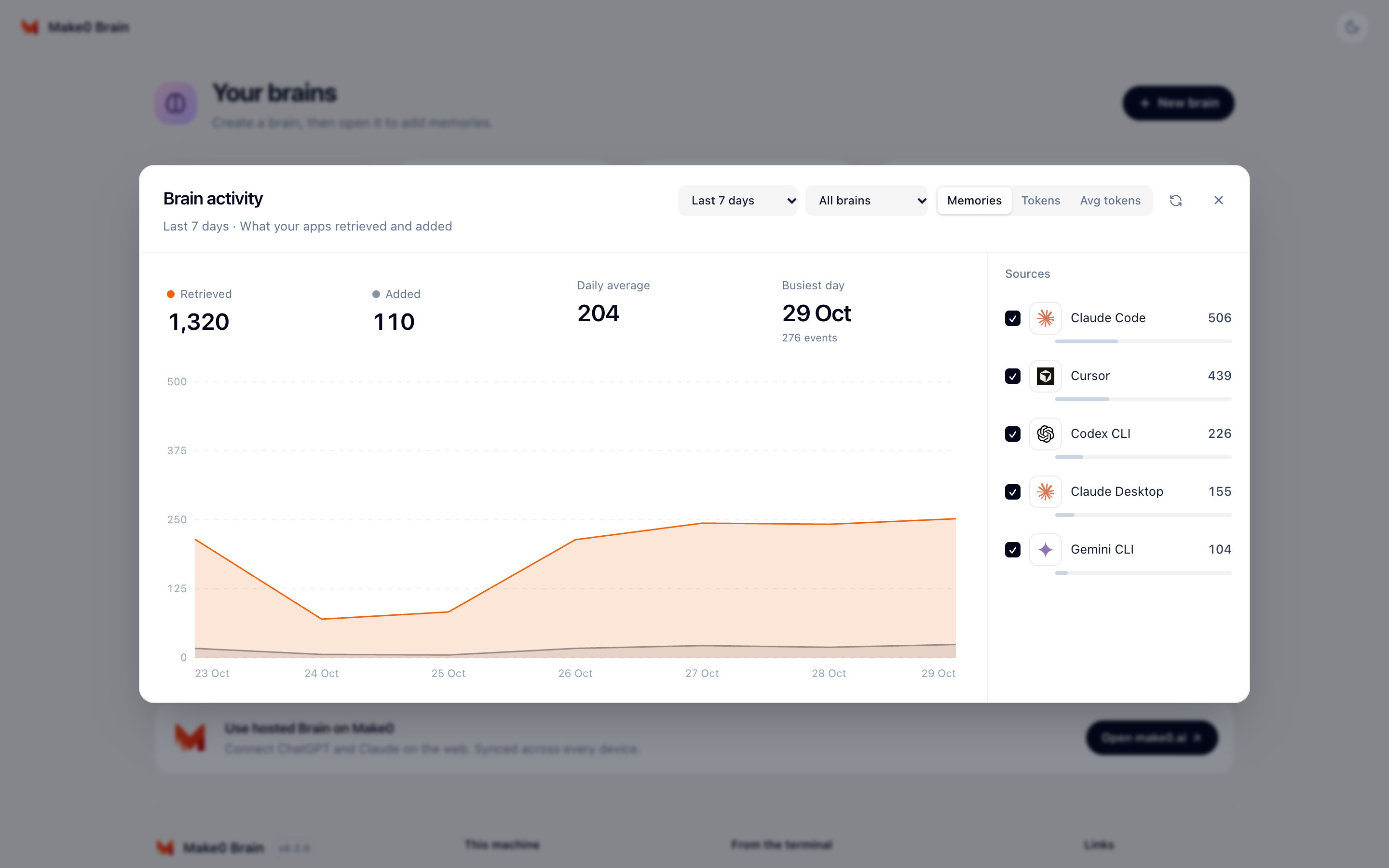
Activity across connected apps
Memory version history
Related memories in the graph
Try it
- Run the setup command below and restart your connected apps.
- Ask one agent to remember a harmless test fact.
- Ask another agent in a new session to find it.
- Open the local viewer to check the writer and version history, then remove the test memory.
Make0 Brain is open source under the MIT license. View the source and full setup guide on GitHub.
Run Make0 Brain locally
npx @make0-ai/brain initContribute
I built Make0 Brain to solve a problem I faced while working with multiple agents, and I’d love your help making it better. Contributions, ideas, and bug reports are welcome - visit the GitHub repository to get involved.

