OpsEcho - Voice Incident Commander
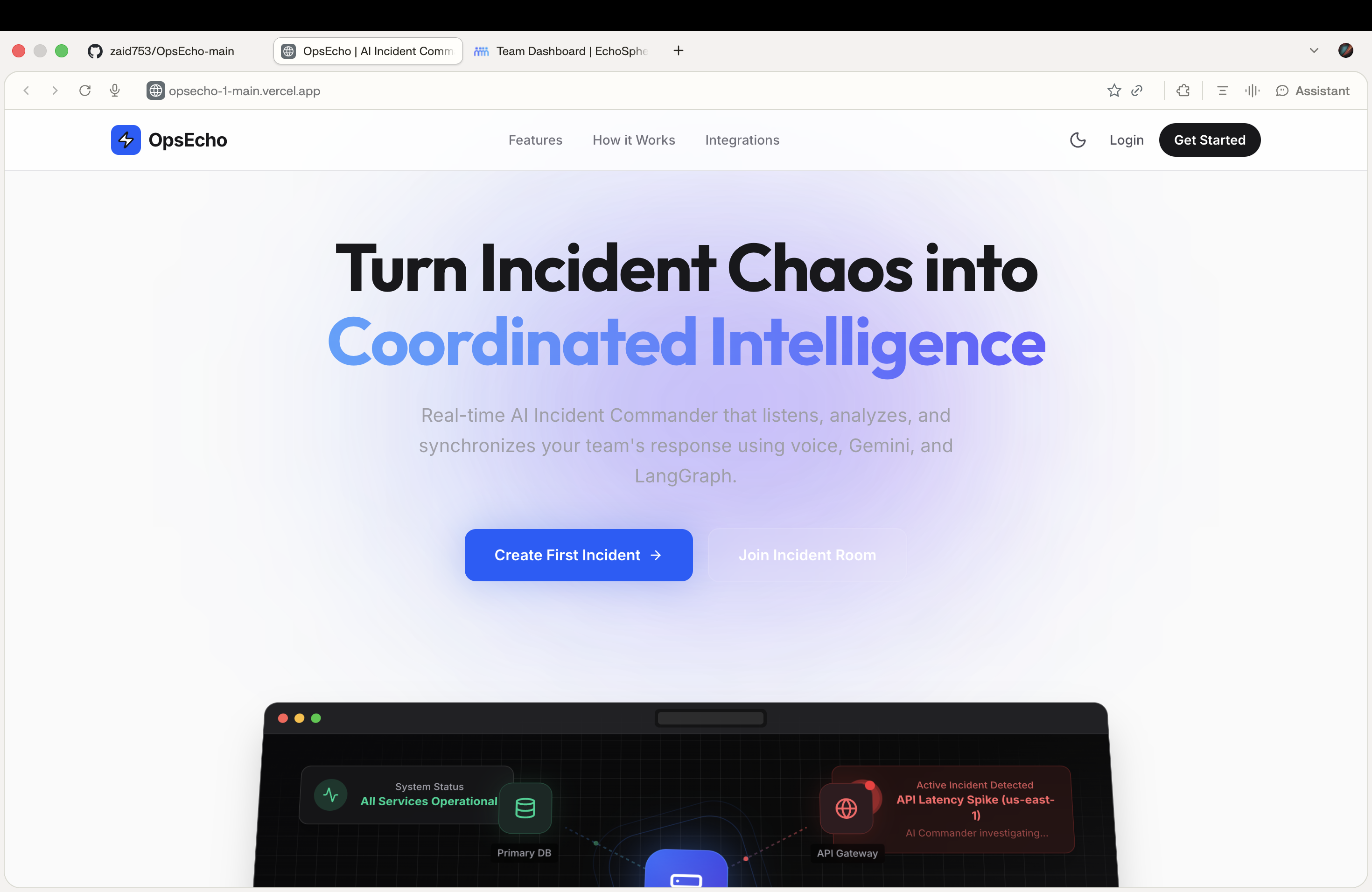
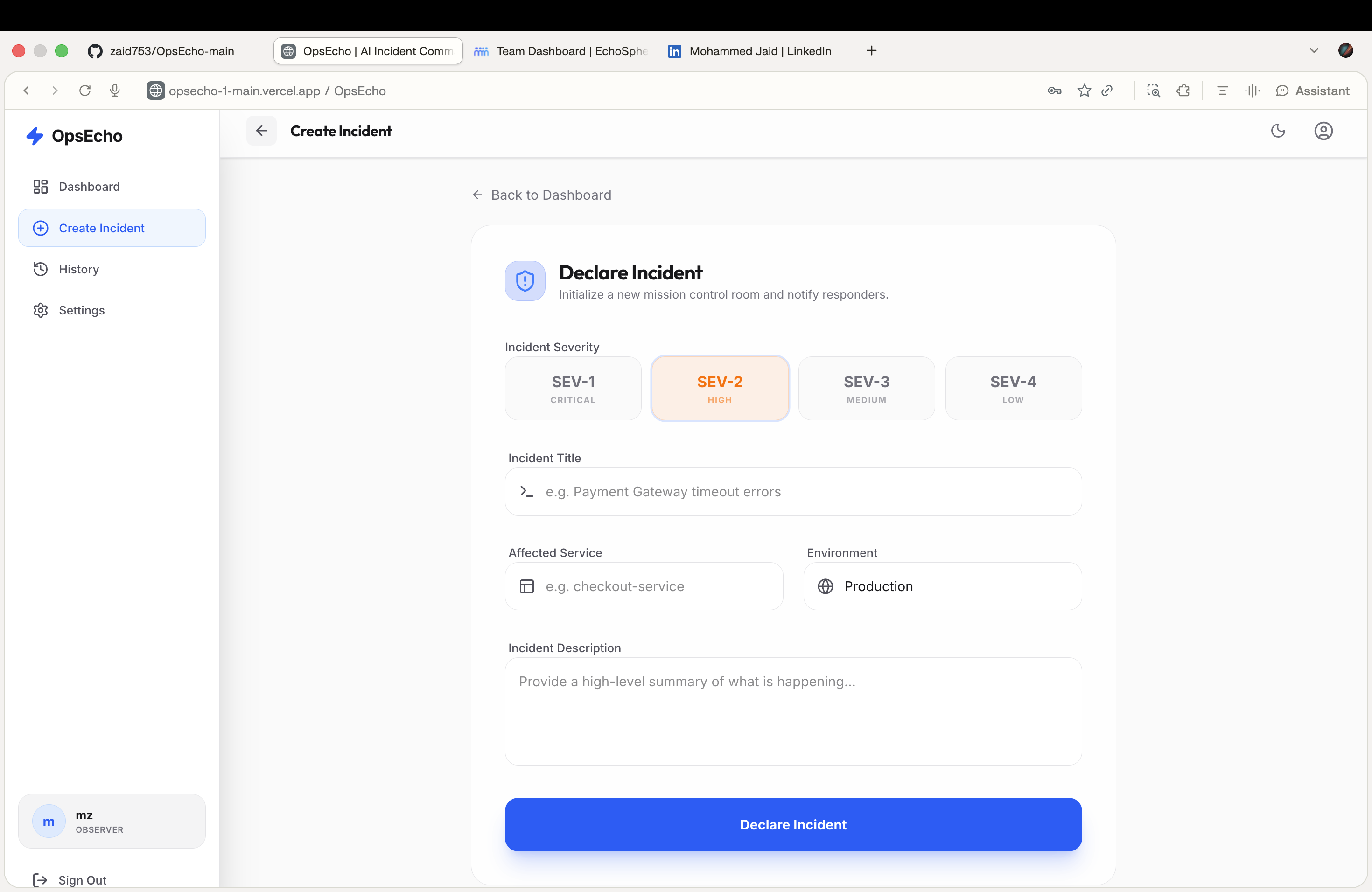
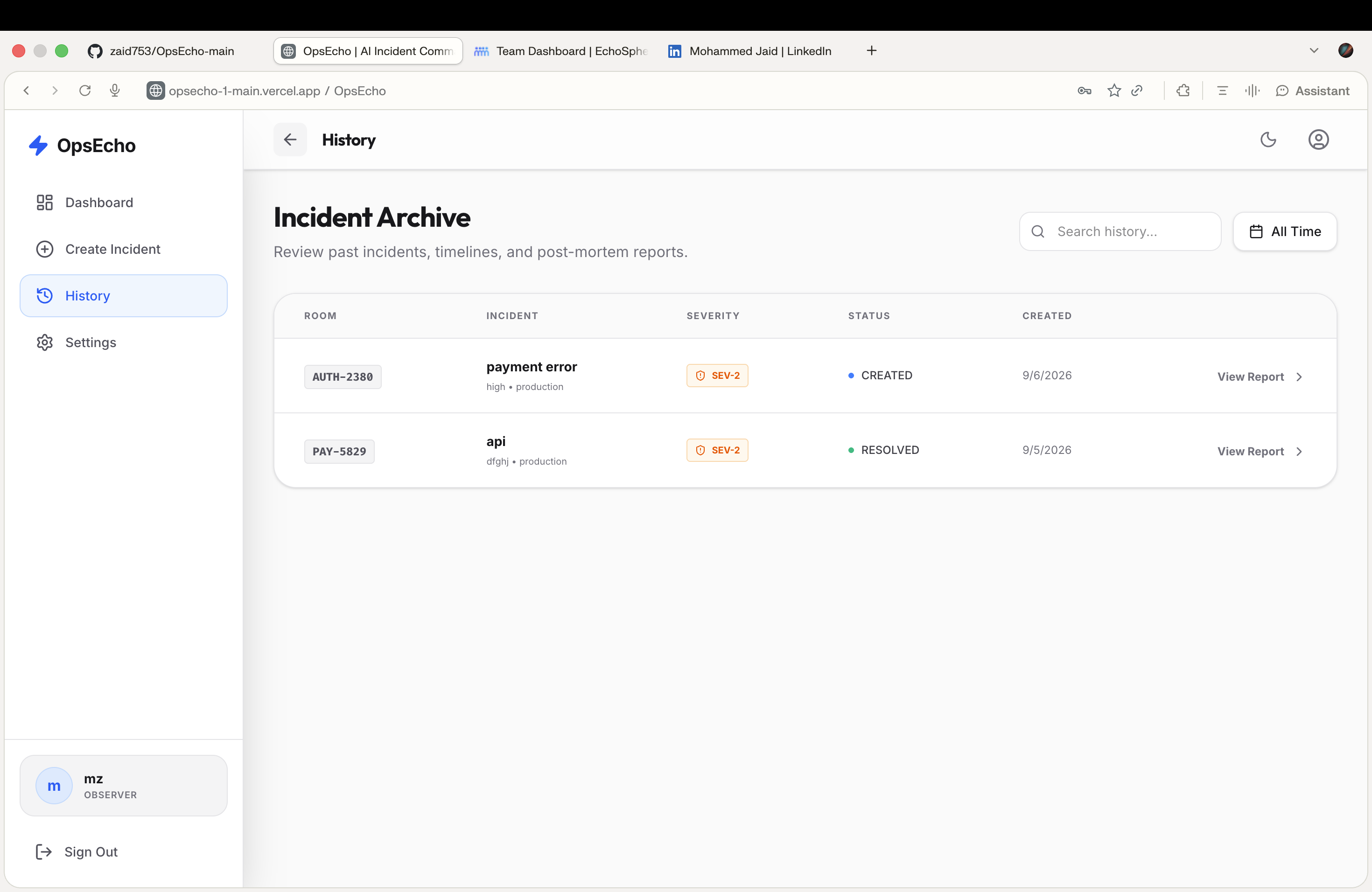
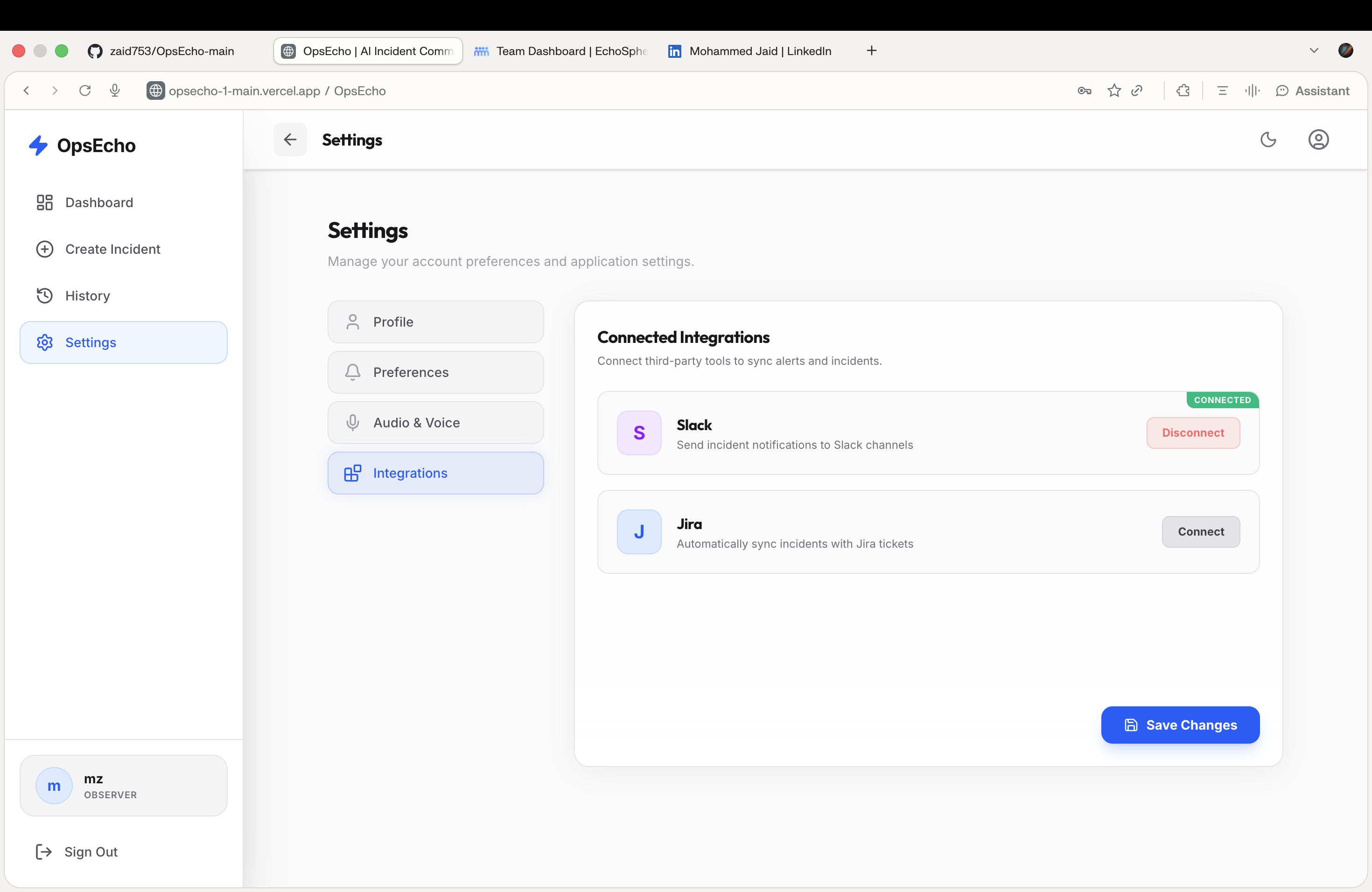
Link to open source: https://github.com/zaid753/OpsEcho-main
Link to Live Project: https://opsecho-1-main.vercel.app/
OpsECHO
Built by Team VoxForge
The Problem
During a real incident — a payment system outage, a service disruption — engineers, support staff, and business stakeholders all join a call and talk at once. Someone says something with total confidence; someone else assumes it's true; ten minutes later it turns out to be wrong. A rollback that hasn't started gets referenced as if it already has. Critical facts get buried under speculation, decisions go untracked, and action items are assigned verbally and immediately forgotten.
By the time anyone writes the postmortem, half the context is gone, and there's no reliable way to reconstruct what the team actually knew — versus merely assumed — at each point in time. Worse, most existing incident tools (Slack-based bots, chat-native platforms like incident.io) only see what people type. In a live voice call, that's almost none of the actual conversation.
What OpsECHO Does
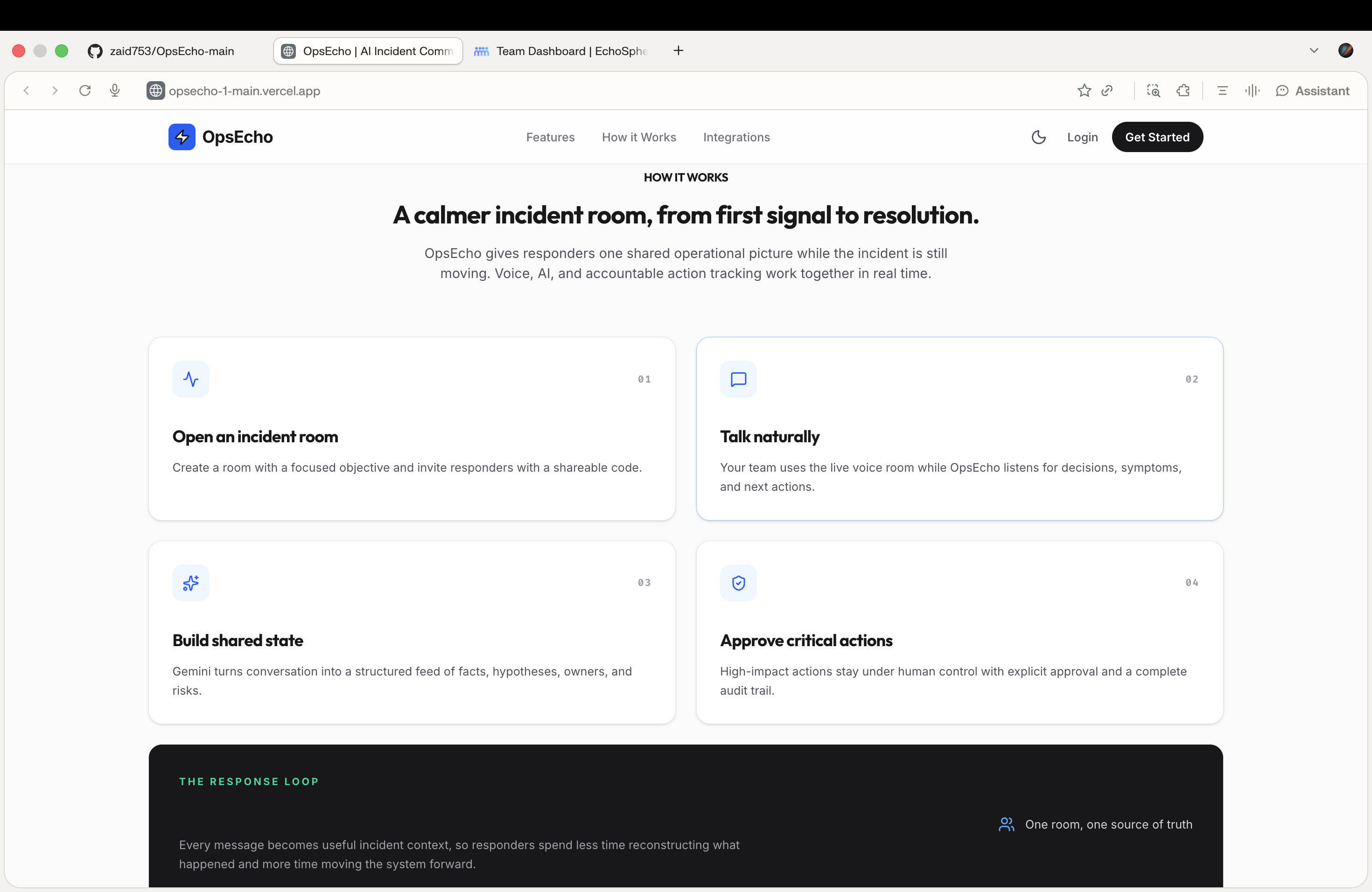
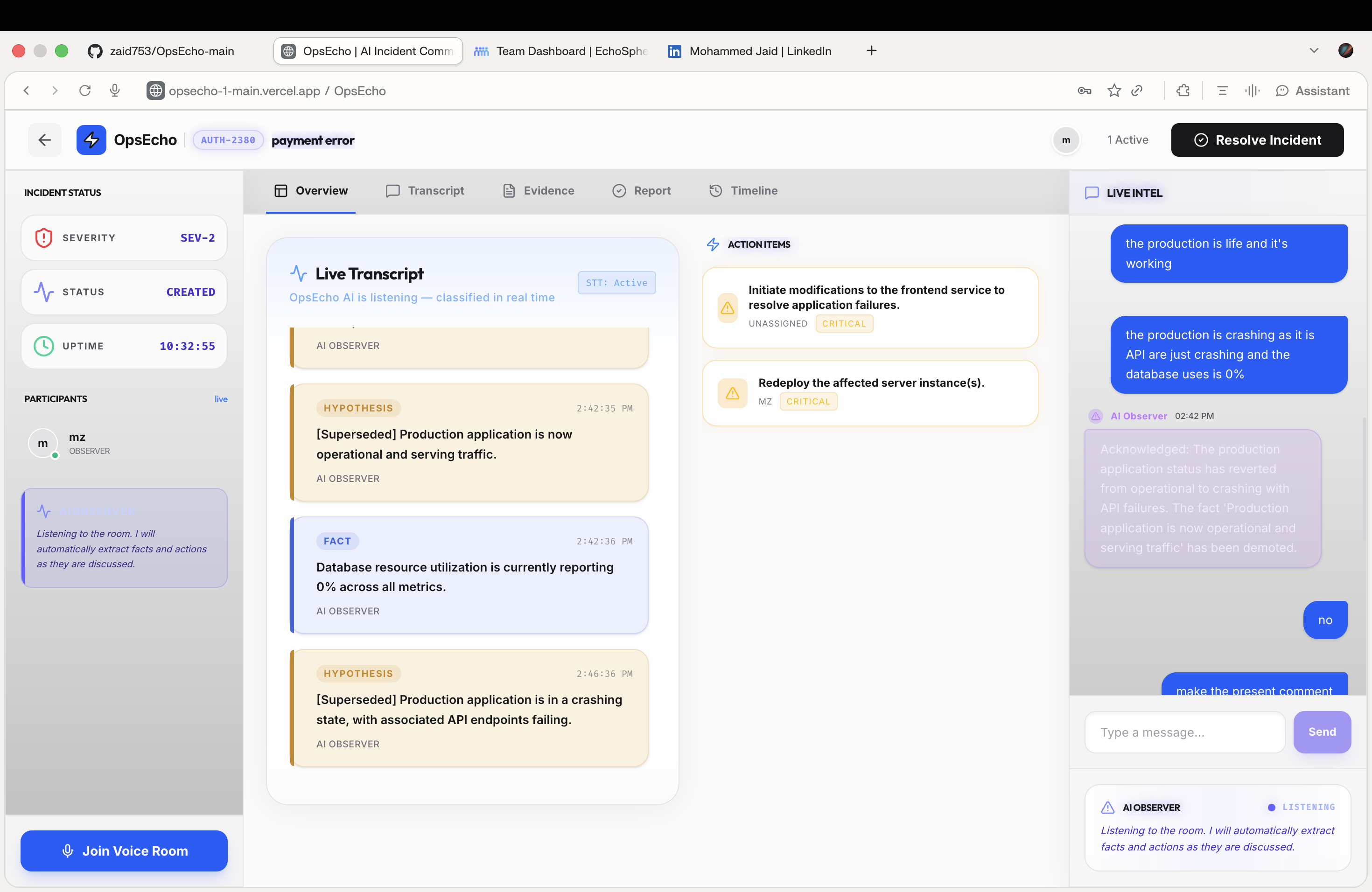
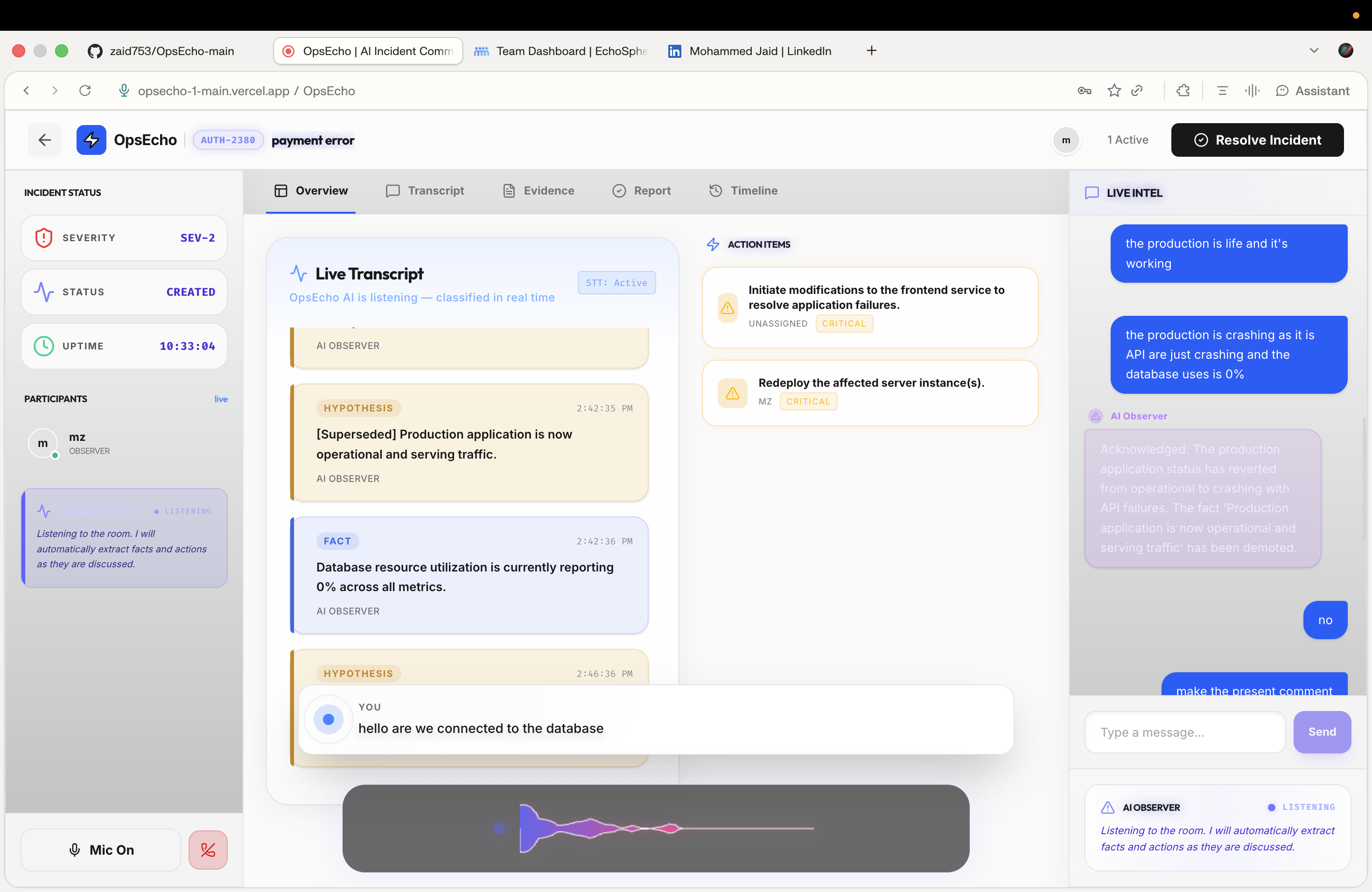
OpsECHO is an AI voice agent that joins the live incident call as a real participant, through Agora's Conversational AI Engine. It listens continuously, transcribes the conversation in real time with per-speaker attribution, and classifies every substantive statement into one of four categories: Fact, Hypothesis, Decision, or Action Item.
The classification isn't naive. A statement only becomes a confirmed Fact once it's independently corroborated — not simply because someone stated it with confidence. This distinction matters: it's exactly the gap that lets wrong assumptions spread unchecked in a live incident.
When two people's statements genuinely contradict each other, OpsECHO flags the conflict the instant it happens, rather than letting it silently pass while the conversation moves on. It builds a structured, timestamped timeline of the entire incident as it unfolds — and on request, produces an instant recap covering what's confirmed, what's still speculative, what's been decided, and what remains unresolved.
Humans Stay in Control
OpsECHO never takes action autonomously. When it identifies something actionable — a ticket worth filing, a status update worth posting — it surfaces the suggestion and waits. Nothing external happens without a person explicitly clicking Confirm first. This isn't a limitation we're apologizing for; it reflects how the best incident-response tooling is actually built today: AI that assists and structures, with humans retaining final authority over consequential actions.
Why Voice-Native Is the Real Differentiator
Nearly every major incident management platform is chat-native — built around the assumption that coordination happens through typed messages in a channel. OpsECHO starts from the opposite premise: the richest, most time-critical information during an incident is spoken, in the room, in real time. An AI that can't hear that conversation is always working from an incomplete picture, no matter how sophisticated its analysis of the typed record is.
Architecture, Briefly
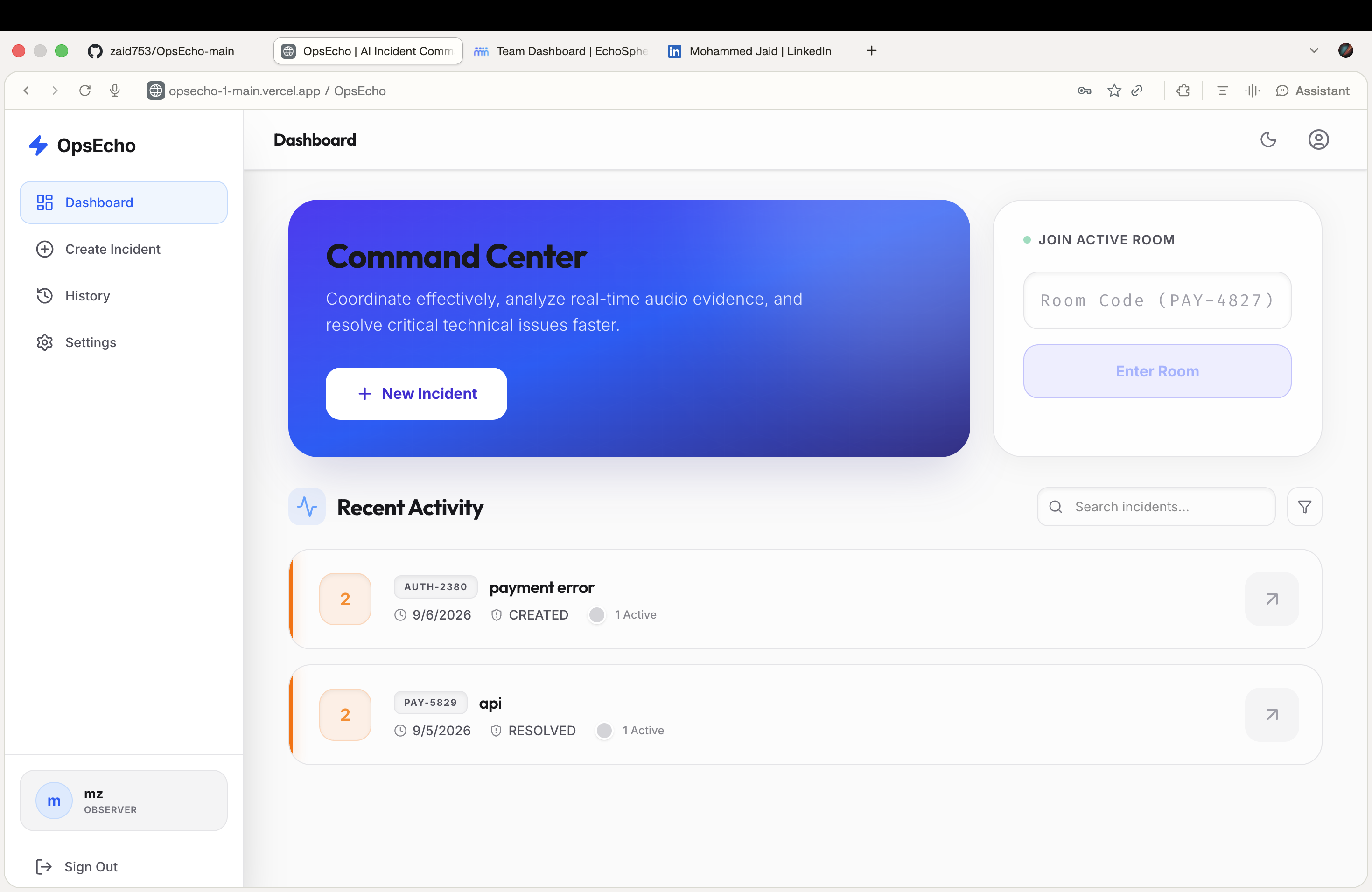
OpsECHO runs on three coordinated layers: Listen (Agora RTC + Conversational AI Engine capturing live, speaker-labeled speech), Understand (an LLM classification pipeline turning raw transcript into structured Facts, Hypotheses, Decisions, and Action Items, with conflict detection built in), and Act (a live dashboard surfacing the timeline and any suggested actions, gated behind explicit human confirmation before anything reaches Slack).
Our Goal
We want incident response teams to have a live, shared, trustworthy understanding of their own conversation as it happens — reducing resolution time, preventing repeated mistakes built on unconfirmed assumptions, and producing an accurate record afterward without anyone stopping to take notes. Longer-term, we see this becoming an organization's living memory of past incidents, so a team can eventually ask "has this exact failure happened before?" instead of starting from zero every time.
Built by Team VoxForge, powered by Agora's Conversational AI Engine.
This build was uploaded as a hackathon project


