Python Chess Engine
Link to open source: https://github.com/HarshitSRIVASTAVA00/CHESS-ENGINE
Link to Live Project: https://harshitsrivastava00.itch.io/noobai
A fully functional, object-oriented chess engine built from scratch in Python using Pygame.
This project goes beyond a simple 2D board game by implementing a highly efficient, mathematically rigorous rules engine. It calculates absolute pins, restricts paralyzed pieces, and seamlessly manages complex board states and edge cases like En Passant and Castling.
Building the rules of chess requires handling massive amounts of edge cases and state memory. Here is how this engine solves them:
- Advanced Move Generation: Instead of a naive approach that simulates every possible move to check for legality, this engine uses mathematical algorithms (ray-casting style) to identify absolute pins, checks, and sliding trajectories (Queens, Rooks, Bishops) instantly.
- Robust State Management: Implemented a chronological state timeline (History Logs) to track transient game states. This guarantees flawless execution of the "Undo" function without corrupting castling rights or En Passant ghost squares.
- Complex Edge Cases Solved:
- Castling: Verifies intermediate squares are completely empty and untouched by enemy attack rays before permitting the King and Rook to swap.
- En Passant: Tracks a 1-turn "ghost square" memory that correctly expires if not immediately acted upon.
- Pawn Promotion: Automatically detects final-rank advancement.
The codebase is strictly separated into two main components following standard MVC (Model-View-Controller) design principles:
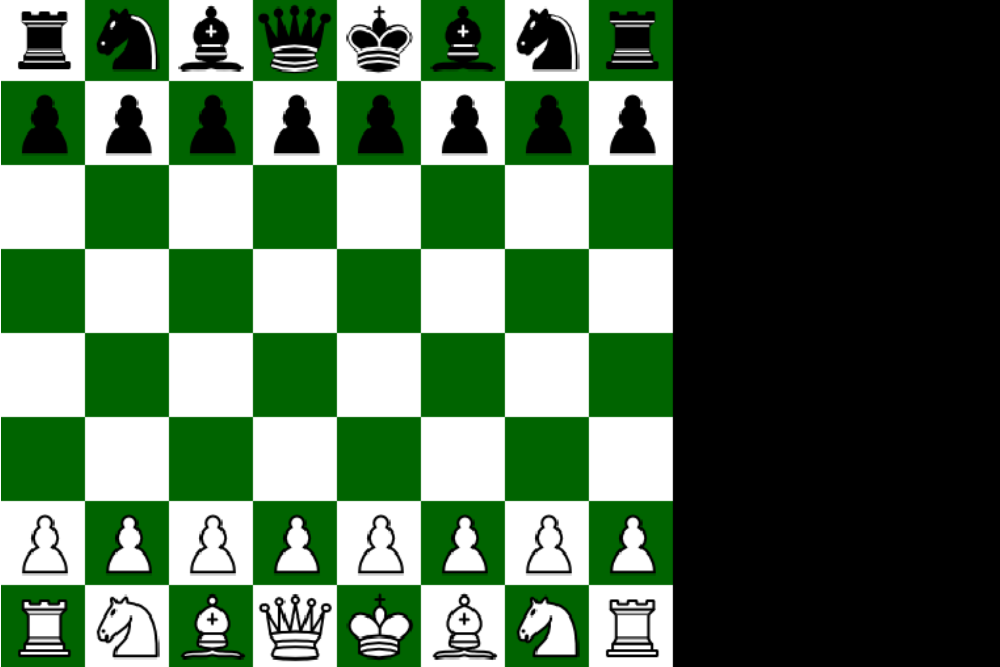
ChessEngine.py(The Model): The brain of the operation. It stores theGameState, determines valid moves, keeps a move log, and handles all board logic. Completely independent of the UI.ChessMain.py(The View & Controller): Handles the Pygame GUI, captures user mouse clicks, renders graphics (featuring a classic green and white tournament board), and updates the display based on the engine's current state.

