RapidAid AI — Real-Time Voice Emergency Intelligence & Response Coordination
Link to open source: https://github.com/AswinAmalaJones/rapidaid-ai
Link to Live Project: https://rapidaid-ai.vercel.app/
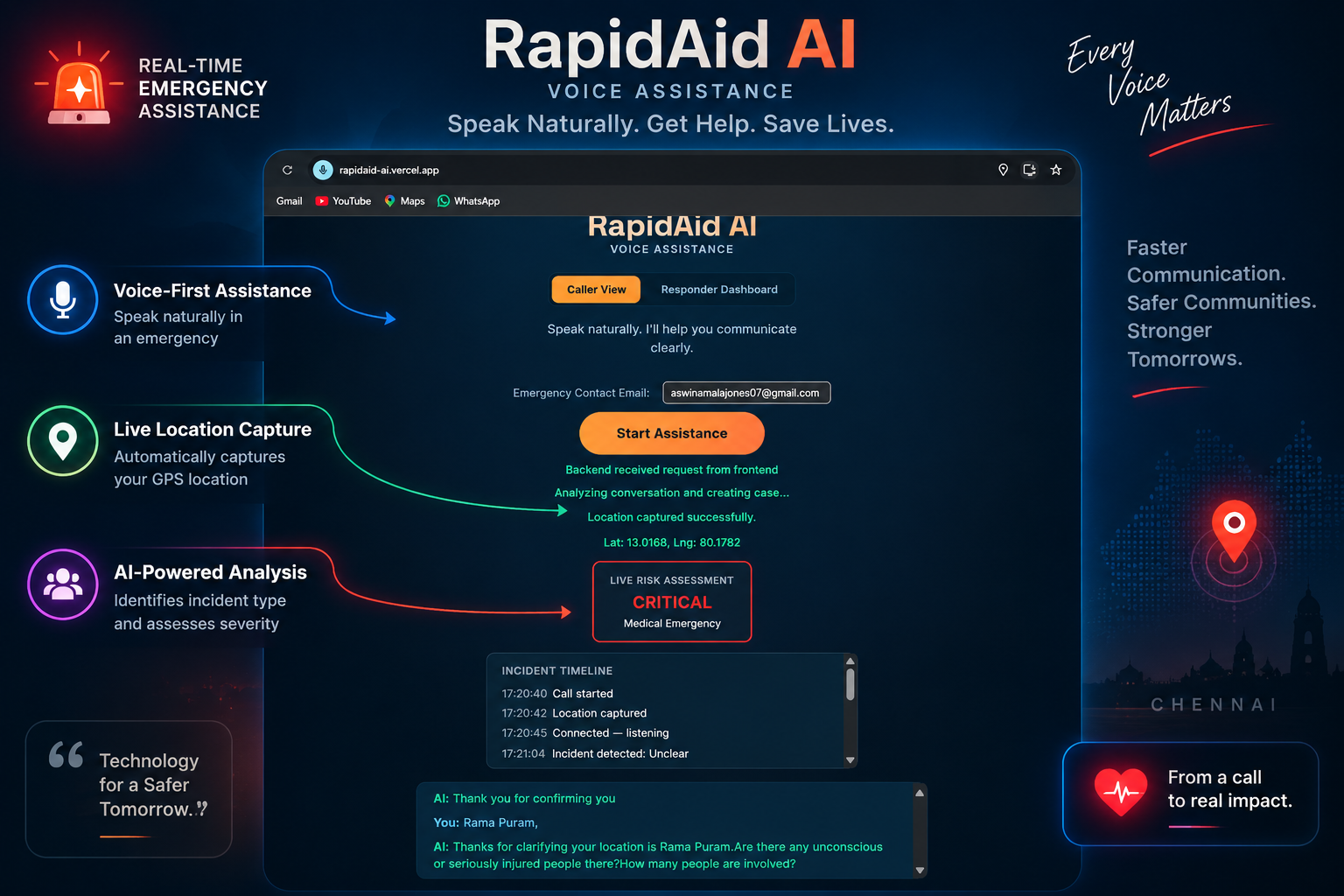
RapidAid AI is a real-time, voice-first emergency intelligence and response coordination platform designed to transform stressful, unstructured emergency conversations into clear, actionable incident information.
When an emergency occurs, users can speak naturally with RapidAid AI. The system listens to the conversation, identifies the potential emergency, captures critical context and location information, and continuously assesses the incident's risk level. Instead of requiring users to navigate complex forms during a high-pressure situation, RapidAid AI helps structure essential information through a conversational experience.
The platform delivers a complete end-to-end emergency workflow:
🎙️ Live Voice Assistance → 🧠 AI Incident Detection → 📍 Location Capture → ⚠️ Real-Time Risk Assessment → 📁 Automatic Case Creation → 👨🚒 Responder Dashboard → 📧 Emergency Alert
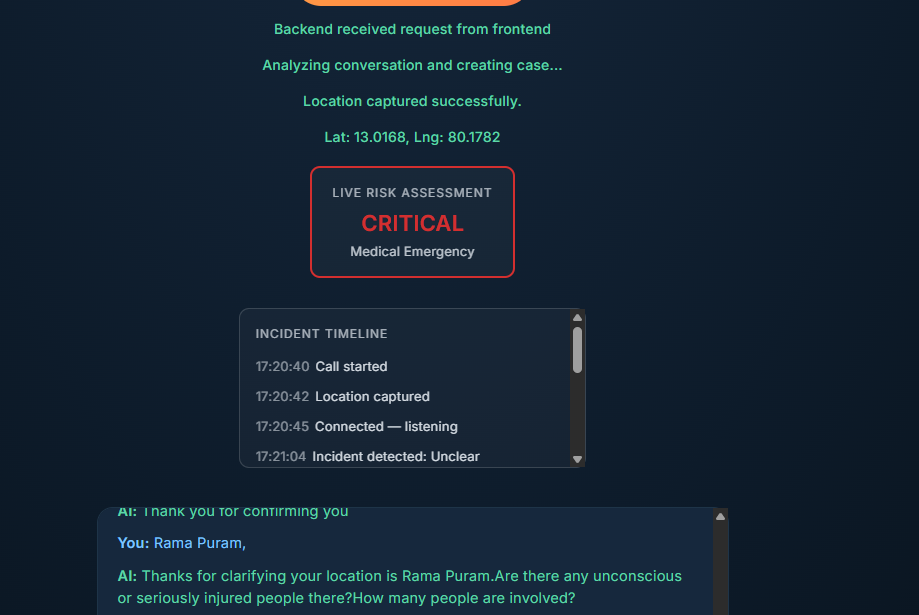
During the conversation, RapidAid AI can identify incidents such as road accidents and medical emergencies and classify their severity. The system records key events in a live incident timeline, including call initiation, location capture, incident detection, and risk assessment.
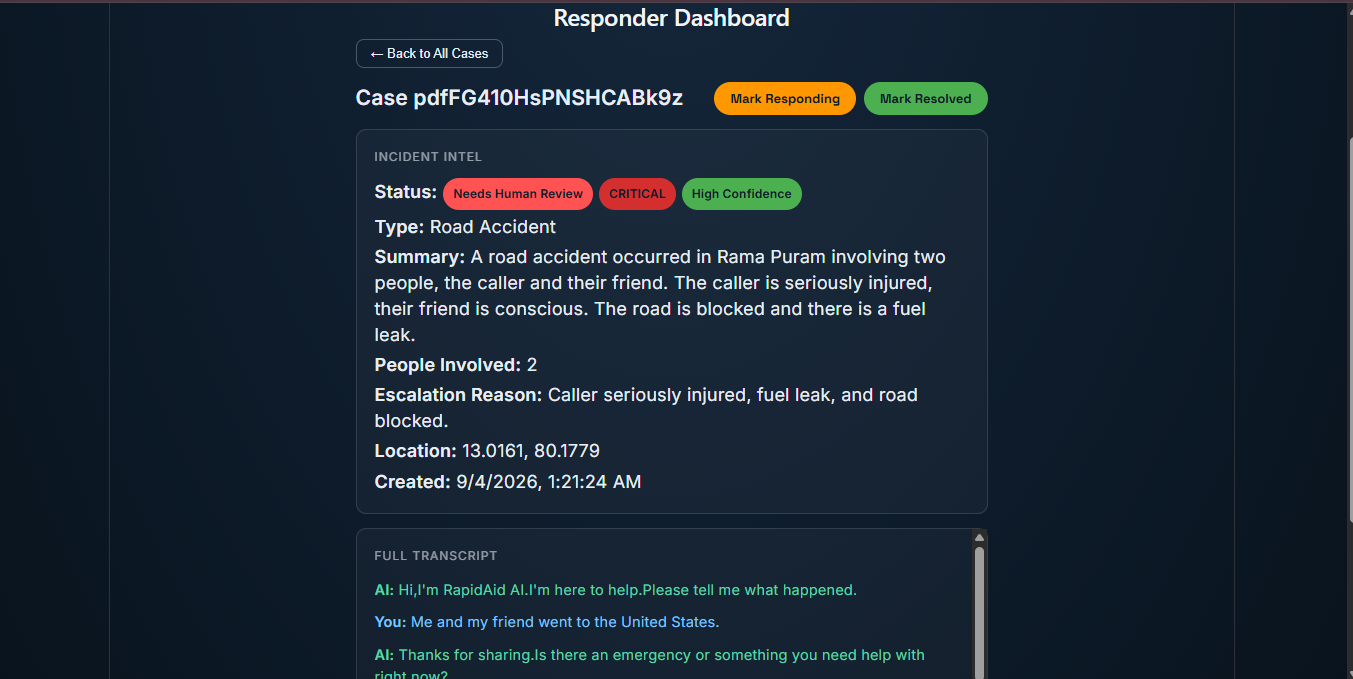
Once an emergency session is completed, RapidAid AI automatically creates a structured case with a unique case ID and AI-generated incident summary. Responders can monitor active emergency sessions and review cases through a dedicated dashboard containing incident details, severity levels, human review status, and location context.
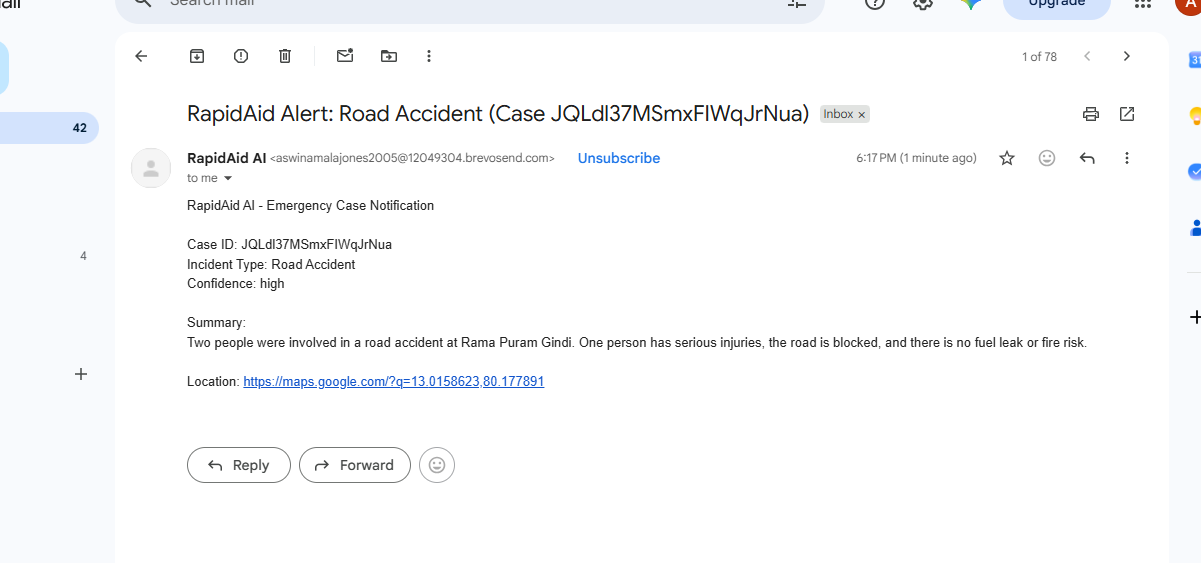
Critical incident information can also be communicated through automated emergency alerts containing the case ID, detected incident type, confidence information, AI-generated summary, and a location link for faster access to relevant context.
RapidAid AI is designed to support human responders—not replace them. The AI helps reduce communication bottlenecks and organize critical information, while important decisions and emergency response remain under human control.
Built as a functional end-to-end prototype, RapidAid AI demonstrates how real-time conversational AI can help make emergency reporting faster, more structured, and more actionable when every second matters.
This build was uploaded as a hackathon project


