Roundtable AI - One Candidate. Three AI Interviewers.
Link to open source: https://github.com/techrifter/roundtableai
Link to Live Project: https://drive.google.com/file/d/1y5UNBRM4PHWKvHmJnwMkeq_ulYZ-YvUs/view?usp=sharing
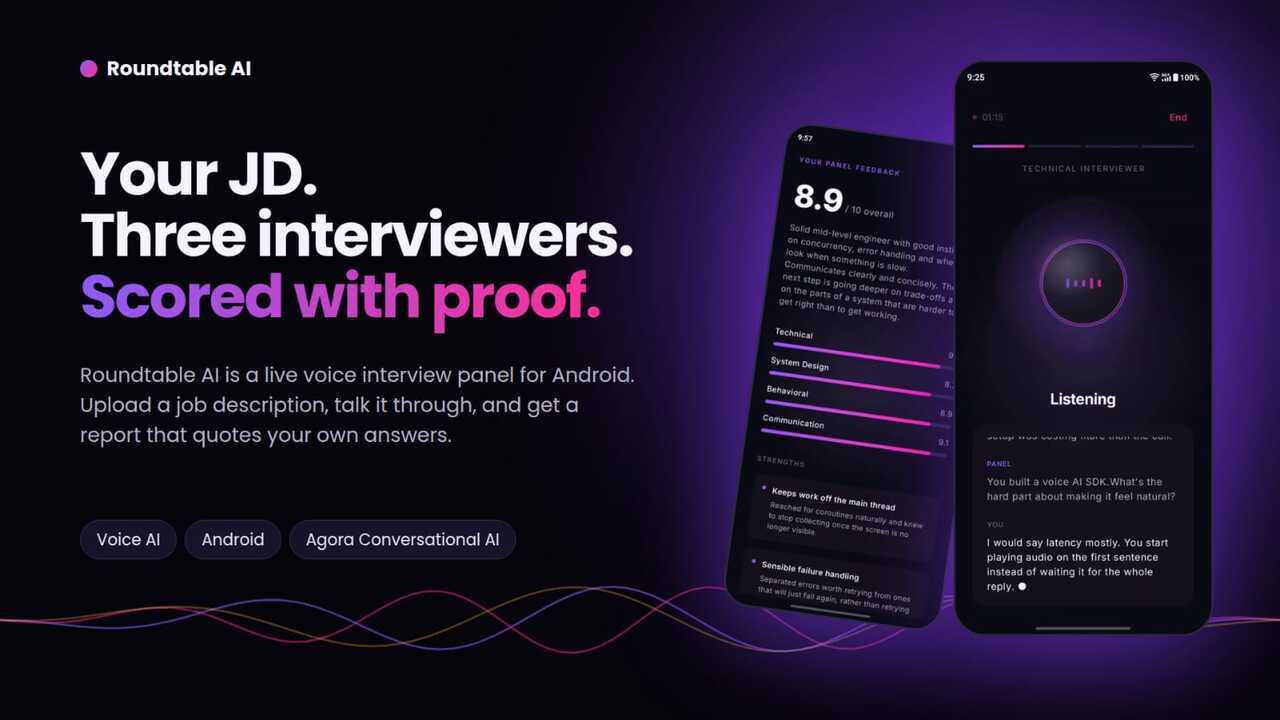
Roundtable AI turns a job description / resume into a live voice interview.
Interview practice today is either a generic question bank or a single chatbot that asks whatever it feels like. Neither prepares you for the role you are actually applying to.
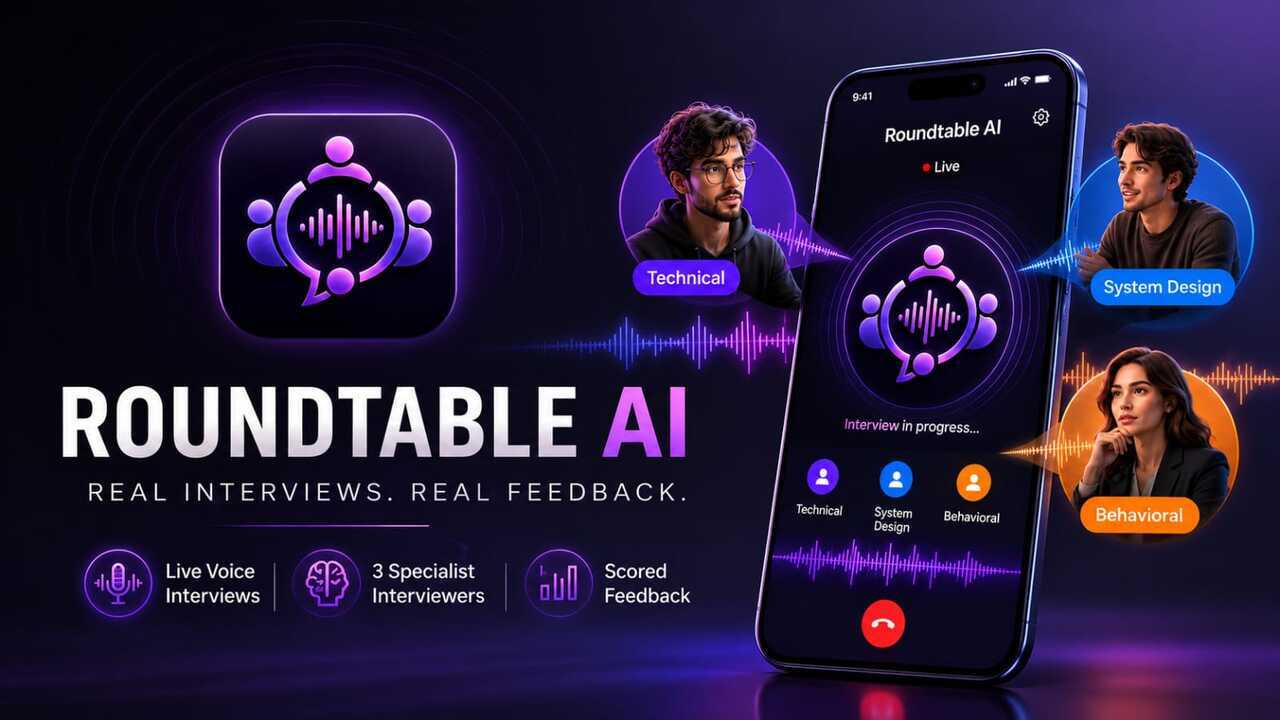
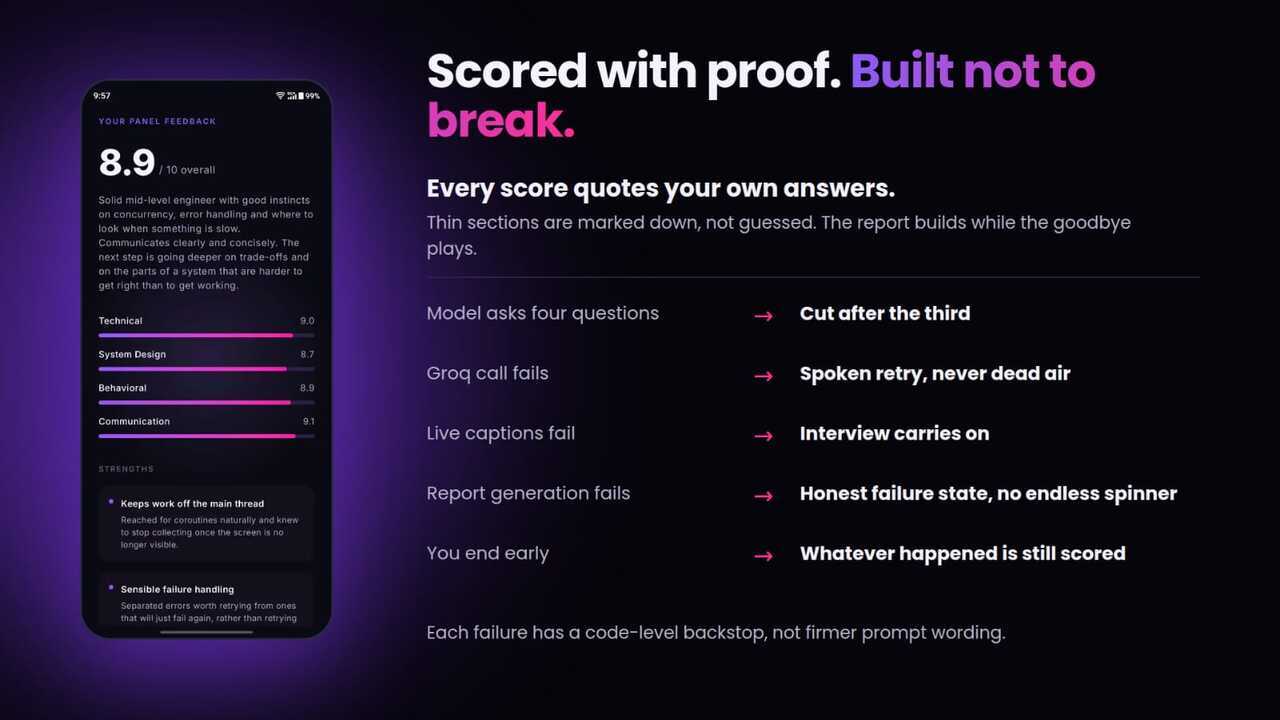
You upload the job description, or your resume. Roundtable AI parses it into a structured profile of the role: required skills, system design areas, responsibilities. Three specialist interviewers panel then question you over live voice, one round each: technical, system design, behavioral. Each has a different voice and persona. When it ends you get a scored evaluation with evidence drawn from what you actually said.
What makes it different
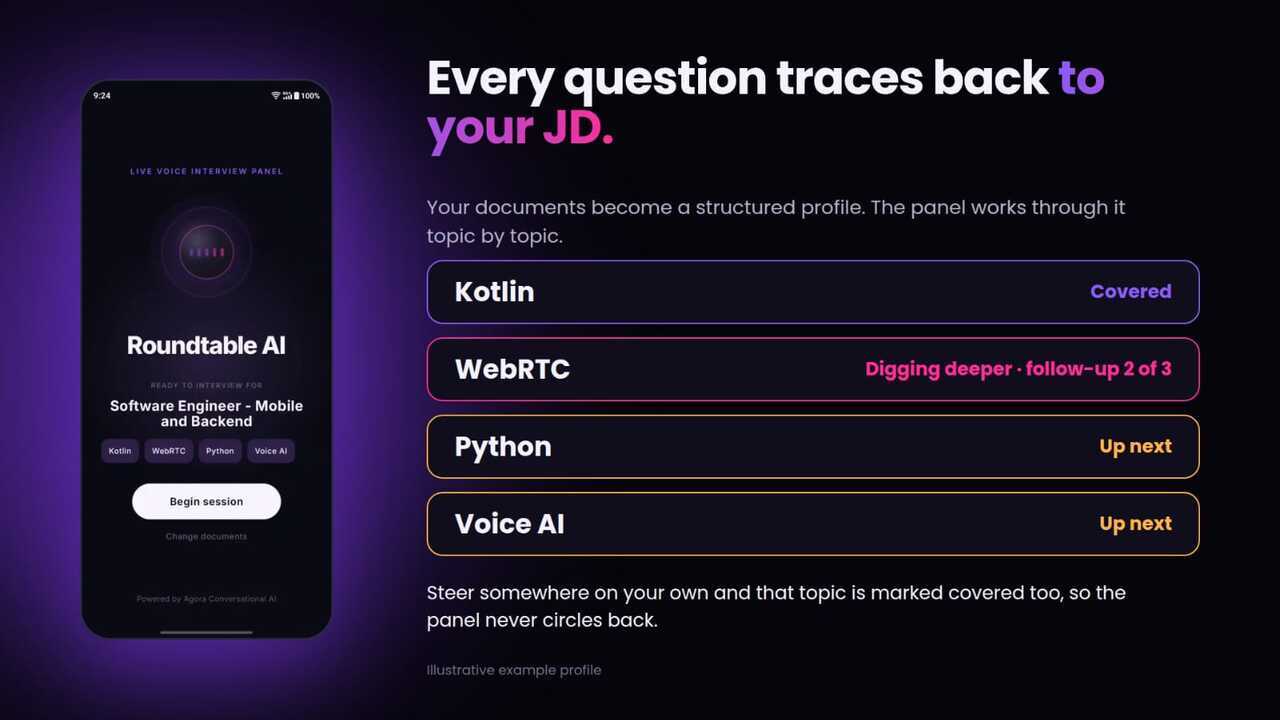
- The interview is built from your JD. Applying for an Android role and a data engineering role produce genuinely different interviews, because every question is generated against the extracted profile.
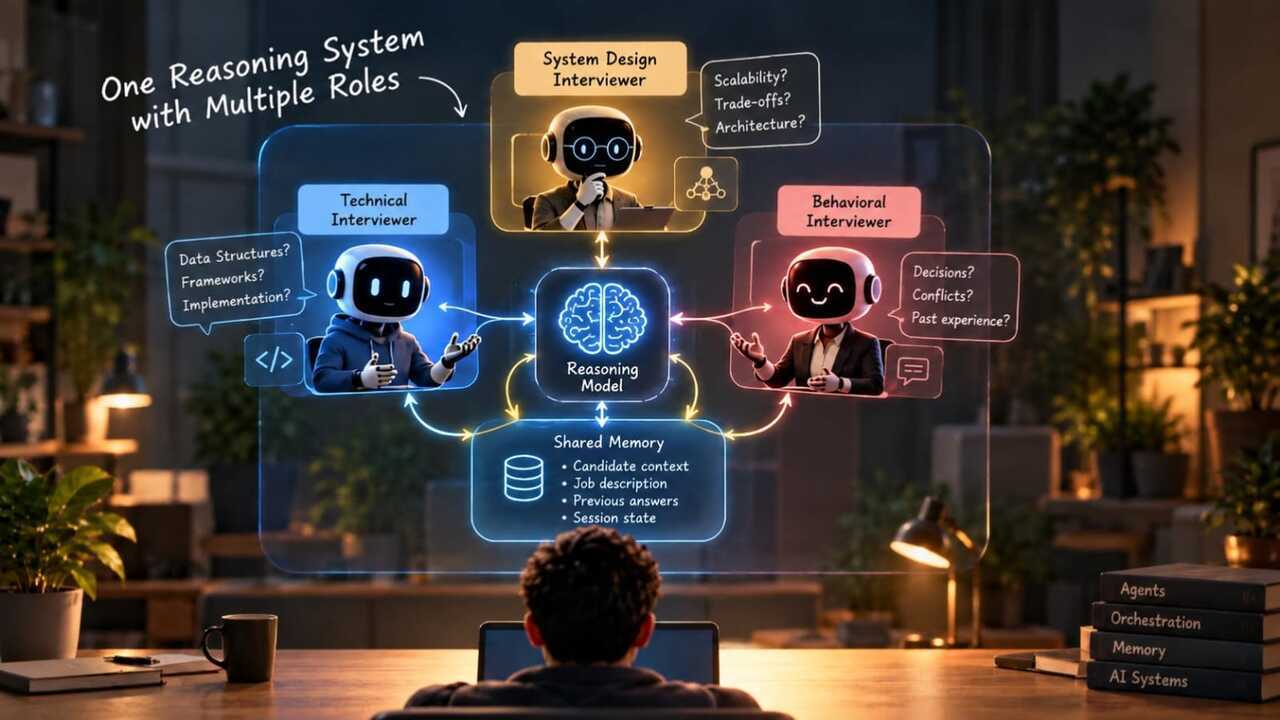
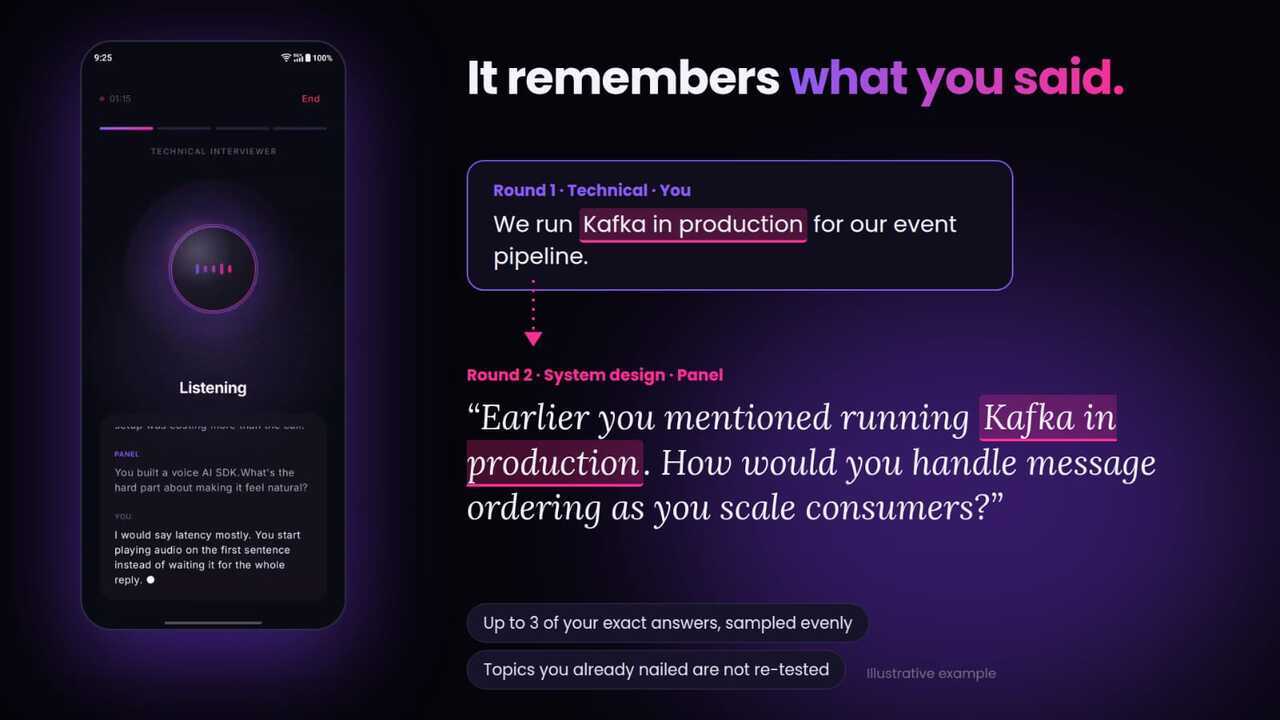
- The panel shares a memory. When the System Design interviewer takes over, it is handed what you told the Technical interviewer, plus the topics you already demonstrated, and told to build on them rather than re-test them.
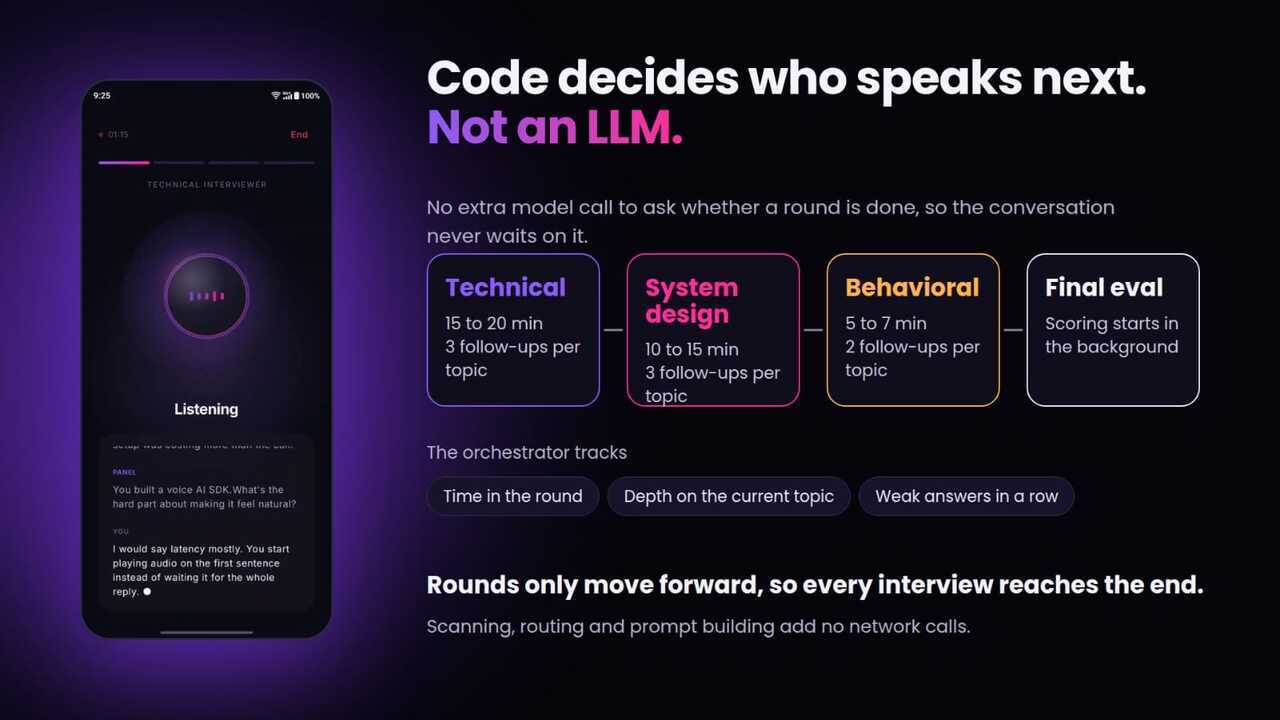
- Routing is decided by code, not an LLM. A deterministic orchestrator tracks time spent, how deep it has gone on a topic, and answer quality. No model sits in that loop, so the interview cannot wander, cannot loop, and the routing adds no latency to a live conversation.
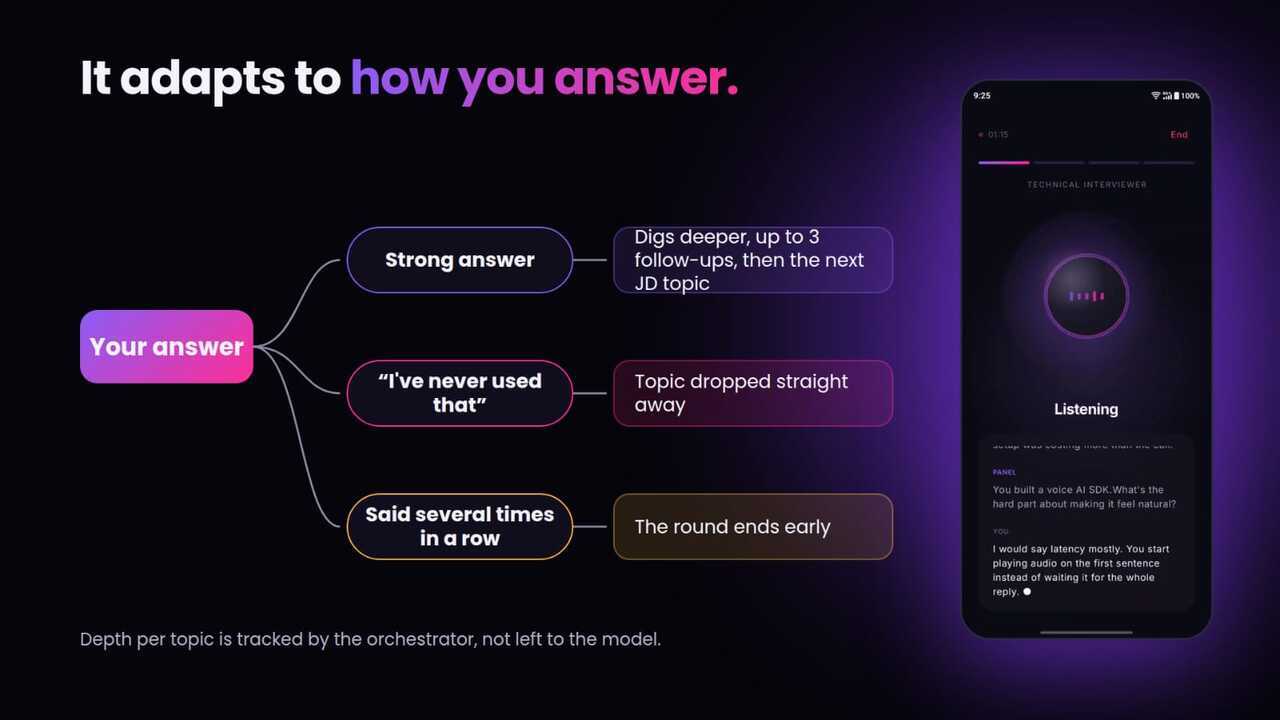
- It adapts to you. Answer a topic well and it goes deeper. Say you have never used something and it drops that topic and moves on.
- Each interviewer sounds like a different person. Per-persona voices are switched mid-session, so the handoff between rounds is something you hear, not something the transcript claims.
How we use Agora
Agora Conversational AI runs the conversation itself: listening, knowing when you have finished talking, letting you interrupt, and speaking back. Our FastAPI backend plugs in as its custom LLM, so every turn arrives as a request we control. That is where the choice of interviewer and the memory across rounds happen. Voice runs on Agora RTC, with AI echo cancellation added so interrupting still works on a phone speaker. Agora Signaling sends the live transcript, the interviewer's current state, and the timing of each speech recognition, model and voice step to the app.
Who it helps
Candidates, who can rehearse the interview for the role they actually want. And hiring teams: the same panel can screen candidates. Point it at your own job description and replace hours of engineer time on first-round phone screens with consistent evaluations backed by evidence.
Candidates, who can rehearse the interview for the role they actually want. And hiring teams: the same panel can screen candidates. Point it at your own job description and replace hours of engineer time on first-round phone screens with consistent evaluations backed by evidence.
Technical Architecture published in TowardsAI
https://pub.towardsai.net/the-agent-boundary-problem-designing-multi-role-ai-systems-with-memory-and-orchestration-1ed09d58c345?source=friends_link&sk=e7771c32505a391676f3ad41060d5181
This build was uploaded as a hackathon project
