VenueIQ
Link to open source: https://github.com/Dineshkumar2006471/VenueIQ
Link to Live Project: https://venueiq-frontend-857911435032.us-central1.run.app/
1. Project Overview: What This Project Builds
- Project name: VenueIQ
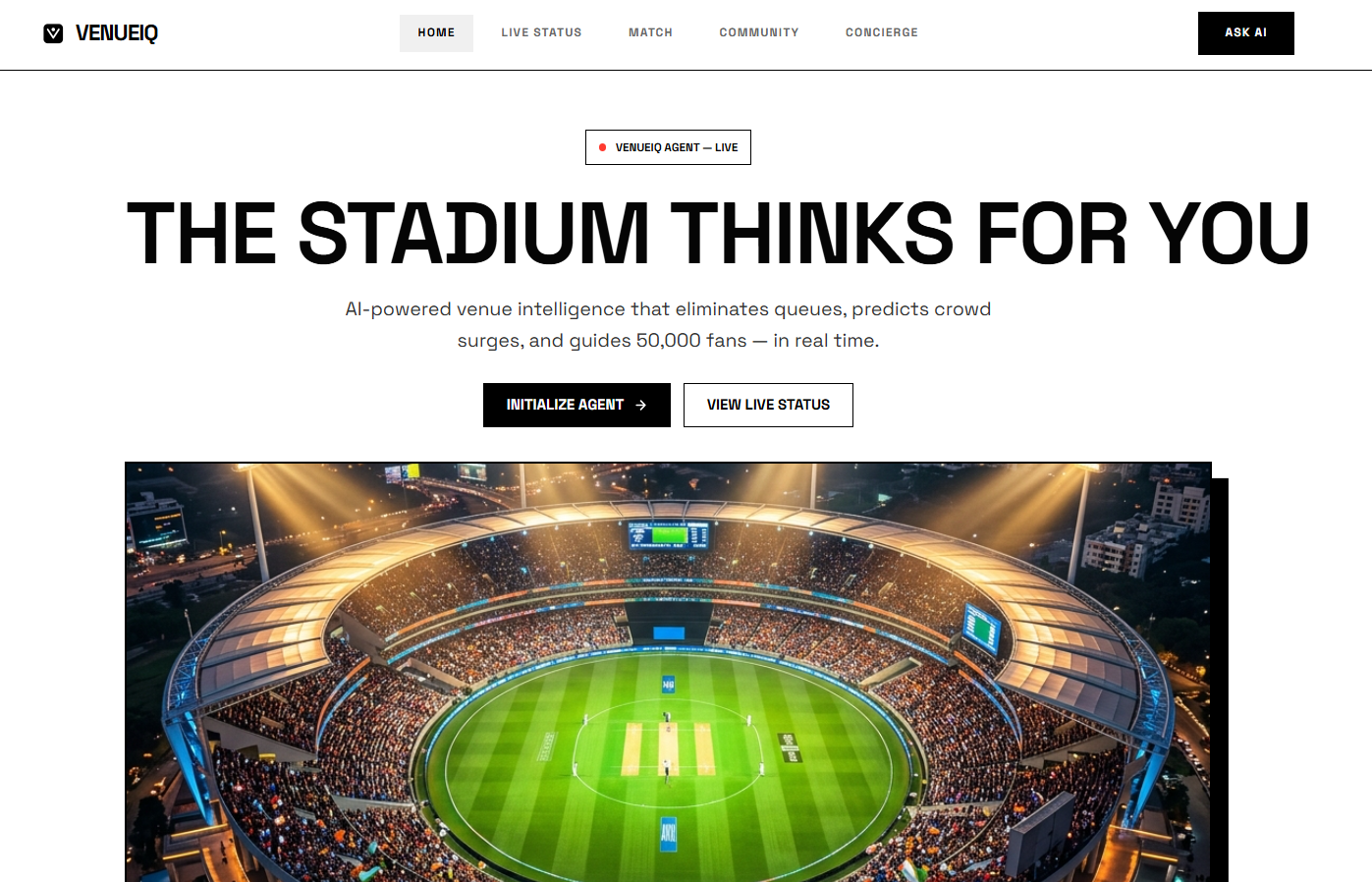
- Core idea: An AI-powered smart venue intelligence platform for large stadiums (modeled around Narendra Modi Stadium, Ahmedabad).
- What it does: Lets fans and venue operators ask natural-language questions and get real-time, actionable answers about:
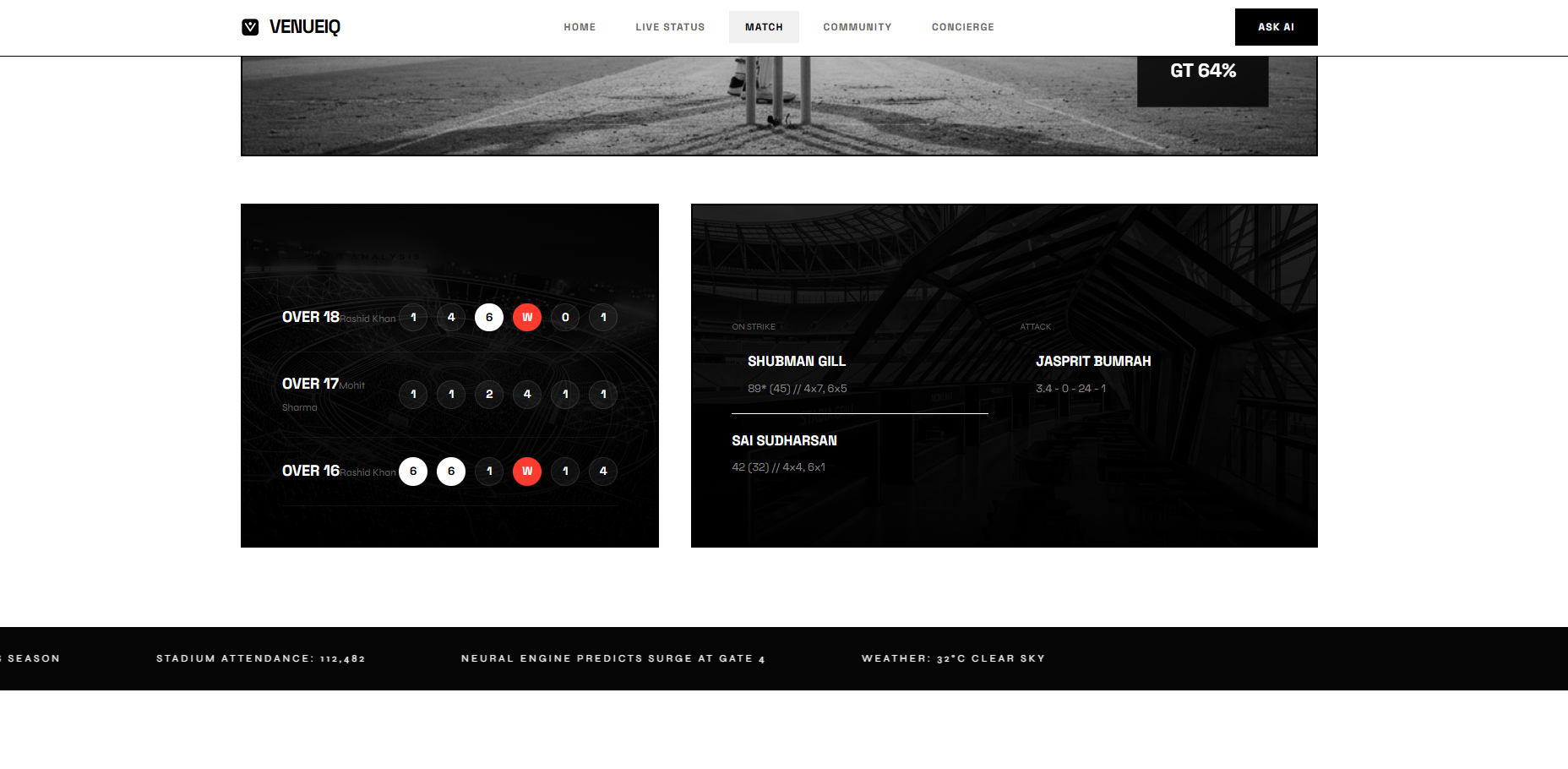
- live match score/status
- shortest food queues
- fastest/least crowded gates
- navigation inside stadium
- incident reporting and admin handling
- Type of solution: Full-stack, production-style, cloud-deployed agentic AI application (not just a chatbot demo).
2. Why You Built This (Problem + Motivation)
A) Real Stadium Pain Points
- Fans lose time in long queues.
- Crowd movement at gates becomes chaotic.
- People struggle to locate facilities quickly.
- Incident reports are unstructured and slow to act on.
- Match context and venue operations are disconnected.
B) Your Motivation
- Build a single intelligent assistant that can combine:
- conversation + decision support
- live data + operational tools
- fan experience + operator workflow
- Demonstrate an agentic, practical AI system for high-pressure public environments.
3. Product Vision and User Value
A) For Fans
- Ask quick questions in plain language.
- Get immediate recommendations (food, gates, directions, match context).
- Better match-day experience with less confusion and waiting.
B) For Operations Teams
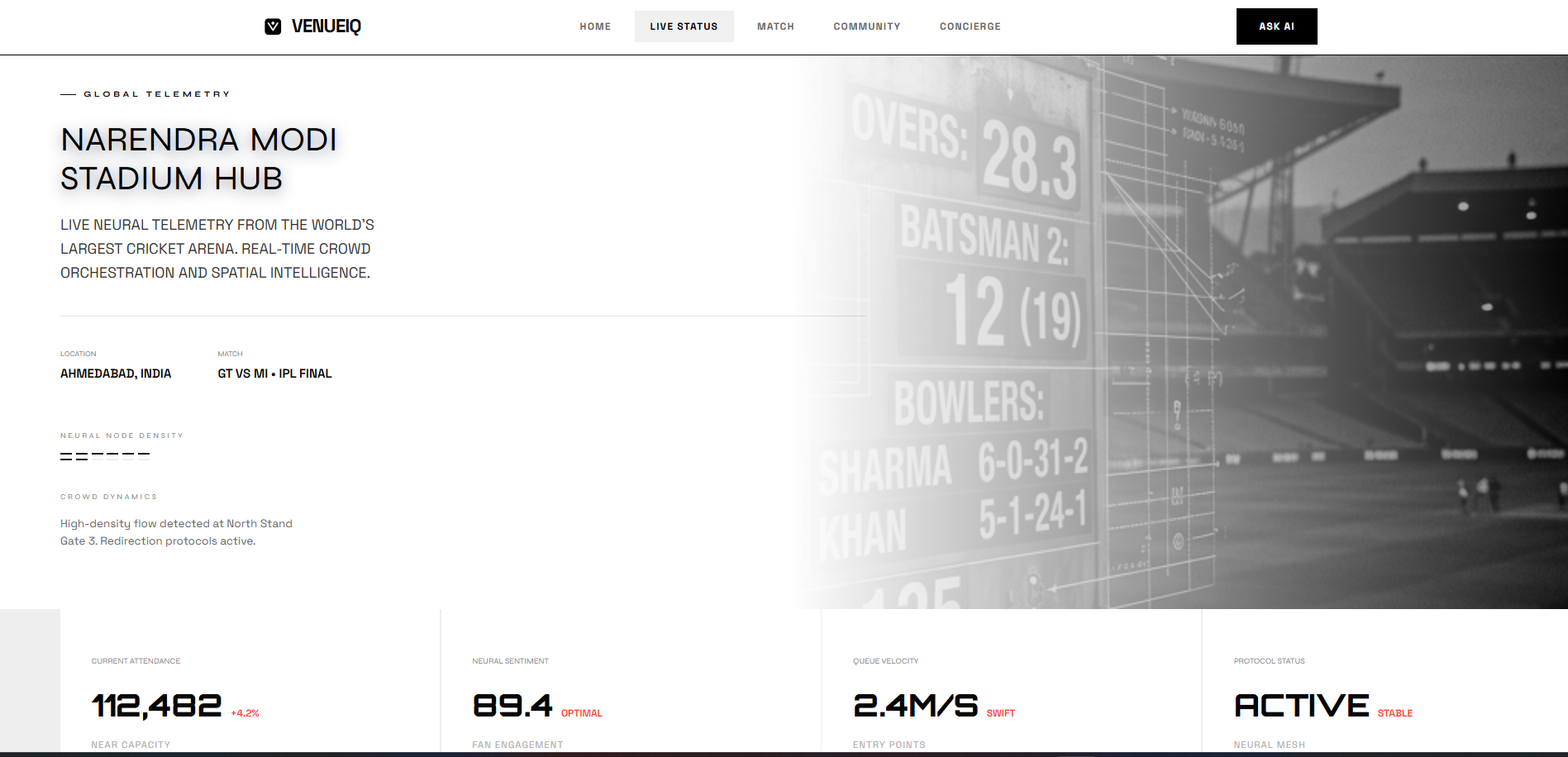
- Centralized visibility of crowd/incident context.
- Structured incident intake and status updates.
- Faster response coordination during events.
C) For Event Organizers
- A scalable pattern for smart venue operations.
- Better public communication via advisories/community feed.
- Future potential for predictive crowd and service analytics.
4. End-to-End System Architecture
- Frontend: React + TypeScript + Vite SPA
- Backend: FastAPI service
- AI layer: Multi-agent orchestration with Gemini via Vertex AI REST
- Data layer: Firestore collections for venue, crowd, match seed, incidents, community
- External live feed: CricAPI (current matches + match info)
- Deployment: Google Cloud Run (frontend and backend separately)
Data/Request Flow
- User sends message from frontend concierge.
- Backend checks fast deterministic path for common high-value queries.
- If not matched, request goes through agent orchestration + tools.
- Agents call Firestore or cricket APIs.
- Response streams back to user.
5. Agentic Design: Why This Is Strong
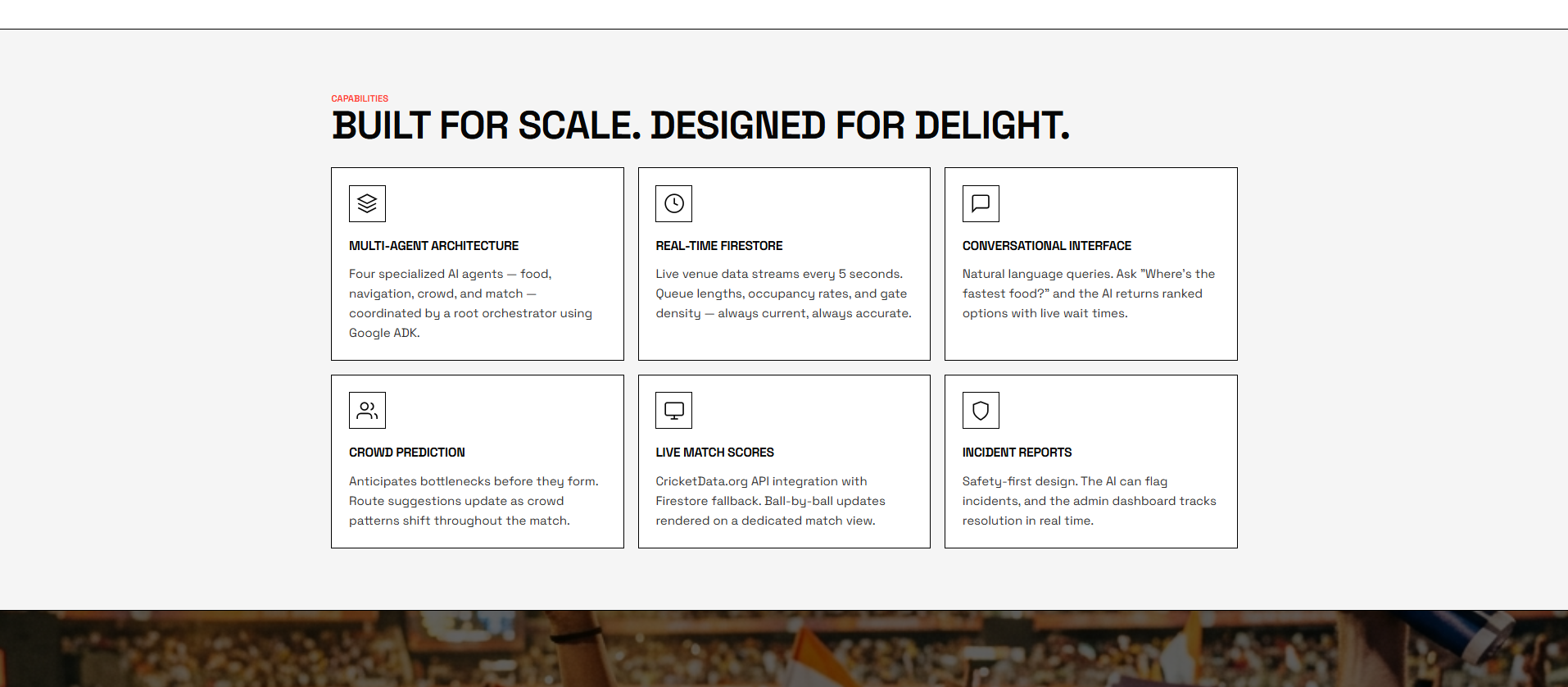
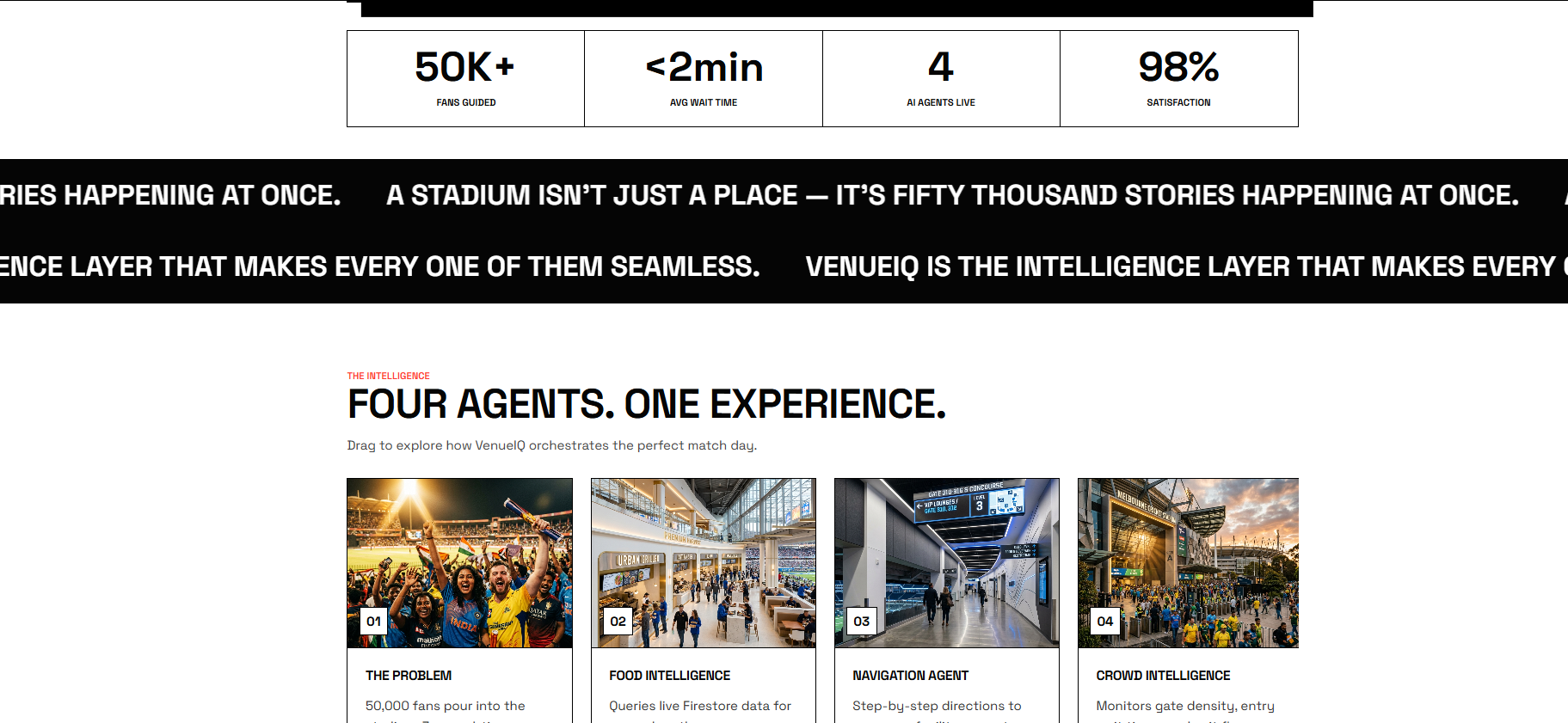
A) Specialized Agents
- VenueIQ_Orchestrator: root routing and general venue logic
- FoodAgent: food, queues, amenities
- MatchAgent: live score/match context + crowd-aware answers
- Navigation and incident tools integrated at orchestrator level
B) Why Multi-Agent Helps
- Domain-specific behavior per question type
- Cleaner tool usage and reasoning boundaries
- Easier future expansion (new specialist agents/tools)
C) Fast Path Strategy
- Common questions (score/food/gate) answered via cached deterministic logic
- Improves demo reliability and user-perceived latency
- Agent path remains available for broader/complex asks
6. Key Functional Modules
A) Concierge Chat (/chat)
- Streaming responses
- Intent-based routing
- Tool-backed answers from live/store data
B) Live Match Intelligence (/api/matches, /api/matches/primary)
- Pulls current cricket data
- Transforms and prioritizes best match view
- Handles API constraints via in-memory caching
C) Venue Operations Admin
- Incident listing and status updates
- Workflow states (open, in_progress, resolved)
D) Community + Advisories
- Fan-generated reports feed
- Organizer advisories (including pinned notices)
7. Frontend Experience Surfaces
- / Landing: product story + positioning
- /chat Concierge: main AI interaction
- /dashboard Live venue telemetry view
- /match Match intelligence surface
- /community Fan + organizer communication stream
- /admin Incident operations console
8. Technology Stack Summary
Frontend
- React 19, TypeScript, Vite
- Router, motion, icons, Firebase client integration
Backend
- FastAPI, Pydantic, Uvicorn
- Google auth + Vertex AI integration
- Firestore data operations
Cloud
- Cloud Run
- Cloud Build
- Artifact Registry
- Vertex AI
- Firestore
9. Why This Project Is Useful for Others
A) Stadium/Event Industry
- Directly applicable to cricket venues, concerts, festivals, sports arenas.
- Blueprint for crowd-aware AI concierge systems.
B) AI Builders/Hackathon Teams
- Strong reference architecture for:
- agent + tool pattern
- low-latency fallback design
- end-to-end deployable product with real UI
C) Smart City / Public Infrastructure
- Pattern can extend to airports, railway stations, campuses, large hospitals, expos.
10. Business and Impact Potential
- Reduced queue frustration and gate congestion
- Improved safety and incident handling
- Higher visitor satisfaction and repeat attendance
- Better operational efficiency for event teams
- Monetization opportunities via premium venue intelligence, sponsorship, and analytics
11. Current Limitations (Honest View)
- Admin endpoints need stronger auth/RBAC hardening.
- Production-grade observability and load testing can be expanded.
- Firestore security/rules and service account policies need stricter enterprise setup.
- Some demo assumptions still depend on seeded or simulated data quality.
12. Future Enhancement Roadmap
- Crowd-aware live routing/map optimization
- Multilingual concierge (Hindi/Gujarati/English)
- Predictive surge alerts for gate management
- AI-based incident prioritization/classification
- Historical analytics with BigQuery
- Strong auth integration for operator workflows


